

 Find a Doctor
 Find a Location
 Programs & Services
 Appointments & Video Visits

Urology Services for Men and Women
Catholic Health's board-certified urologists provide comprehensive care for a full spectrum of disorders and conditions of the bladder, urinary tract, prostate and reproductive system.
Our team of experts combines clinical excellence with a compassionate, patient-centered approach to provide expert care for a wide range of urological conditions.
We utilize the latest technology and the most advanced medical techniques and therapies, including robotic-assisted and minimally invasive procedures, to treat illness, improve function and restore quality of life.
Urology Specialties

Bladder Health

Kidney Health
Prostate Health

Male Reproductive and Sexual Health

Urogynecology & Pelvic Health

Urologic Cancers
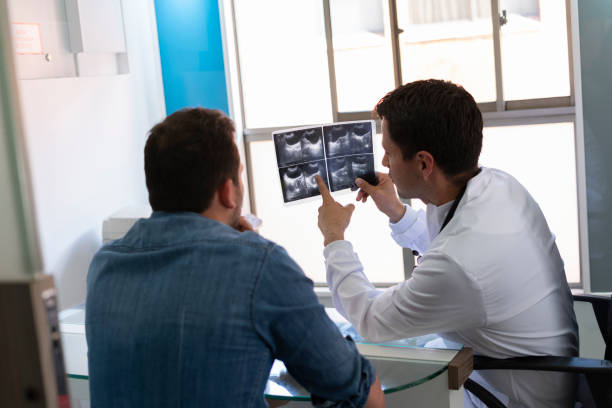
Advanced Diagnosis of Urological Conditions

Urinary evaluations include a detailed medical history and physical examination, an assessment of urinary and pelvic symptoms, a review of personal and family history and lifestyle factors. Additional tests may include:
- Blood tests to detect infection or inflammation
- Urine tests including Post-void residual urine test (PVR)
- Cystoscopy - uses a scope to view the inside of the bladder and urethra
Imaging studies including X-rays, ultrasound, CT, MRI, PET scan, bone scan
Robotic Assisted Surgery
Our experienced surgeons utilize the latest robotic-assisted technology to perform various surgical techniques including:
- Nephrectomy: Partial or total removal of the kidney
- Cystectomy: Removal of the bladder
- Prostatectomy - Removal of the prostate
- Pyeloplasty: Reconstruction of the kidney to relieve blockages
- Sacrocolpopexy: Treatment for pelvic organ prolapse in women
These techniques offer significant benefits over traditional surgery, including less pain and scarring, less risk of infection and blood loss, faster recovery and shorter hospital stays.
Learn more
Advanced Kidney Stone Treatment

The first option is observation and
trying to expel the stone on your own.
00:12.820 --> 00:19.300
In those cases, we recommend drinking a lot of
water, and we can give medications that help
00:19.400 --> 00:22.160
open up the urinary tract
and help the stone pass.
00:22.230 --> 00:25.160
That can be a good option
for small to medium stones.
00:25.460 --> 00:31.820
For stones that get stuck, there are
three procedures that can be performed.
00:32.240 --> 00:36.340
One procedure is called a
ureteroscopy laser lithotripsy.
00:36.500 --> 00:41.780
You basically put a camera up through the
urethra, so you don't make any new cuts into
00:41.800 --> 00:48.460
the body, and you go up to the stone, and you
sand it down to fine sand using a laser and
00:48.520 --> 00:51.480
wash it out.
Third option is for larger
00:51.500 --> 00:52.960
and more complex stones.
00:53.110 --> 00:55.940
It is also a minimally
invasive treatment option.
00:56.380 --> 00:58.670
It's called a percutaneous nephrolithotomy.
00:59.420 --> 01:04.019
With that procedure, we use ultrasound and
X-ray to make a small hole through the skin
01:04.060 --> 01:09.280
into the kidney, around the size of my pinky,
and we're able to pull the stones out through
01:09.340 --> 01:11.860
that hole using an endoscopic camera.
01:11.870 --> 01:18.620
Another minimally invasive option for kidney
stones is to deliver shock waves to the
01:18.720 --> 01:20.780
stone from outside of your body.
01:20.790 --> 01:24.930
This breaks the stone into smaller
pieces and allows those pieces to then
01:24.980 --> 01:26.680
be expelled by the body.
01:26.740 --> 01:33.400
The fifth option is available for only
some kidney stone formers, and that's
01:33.440 --> 01:34.690
dissolving the stone.
01:34.770 --> 01:41.380
A calcium stone cannot be dissolved because
anything that would melt a calcium stone would
01:41.800 --> 01:43.920
melt your skeleton in the process.
01:44.060 --> 01:49.240
However, sometimes based on a CAT scan and
different characteristics in your urine,
01:49.320 --> 01:55.760
particularly if your urine is very acidic, we
can make the diagnosis of a uric acid stone,
01:55.800 --> 02:00.640
which is around one in six patients, and in
those patients, if you make the urine less
02:00.660 --> 02:03.460
acidic, the stones will dissolve like magic.

 Edge
Edge Chrome
 Safari
 Firefox