What is Sports Medicine?
Treatment Methods
Cupping Therapy
Cupping therapy is an ancient healing technique that is now widely used in contemporary medicine including sports medicine and physical therapy. It is a therapeutic technique that utilizes a vacuum force created beneath a small vessel (or cup) applied onto the skin's surface.
This type of therapy may help to provide short-term relief for pain, tightness, and mobility. It is commonly used for:
- Pain Management: For chronic back, neck, shoulder, and knee pain, as well as migraine headaches.
- Muscle Recovery: It can help to reduces stiffness and improves flexibility by increasing local blood flow and releasing fascial tension.
How Does Cupping Therapy Work?
During treatment, specialized cups are placed on the skin to create a vacuum that draws tissue upward, increasing blood flow to the area.
Cupping therapy works by creating localized suction which helps to boost blood flow and decrease muscle tension by loosening and relaxing tight muscles by breaking up adhesions or "knots”.
Types of Cupping Therapy
Cupping methods include:
Dry Cupping: Cups are placed on the skin. The traditional method involved setting an alcohol-soaked cotton ball aflame and the heat would send oxygen out of the cup, creating a vacuum. The modern approach that is more often used involves using a suction device to remove air from the cups and the vacuum force pulls your skin up into the cup.
Running Cupping: This method entails dry cupping but prior to the treatment, lotion or oil is applied to the skin. Once the cups are placed, they are gently moved in different directions over the affected area of your body.
Wet Cupping: A needle is used to lightly puncture your skin before placing the cups. This promotes the release of toxins through the suctioned blood captured in the cup.
Depending on the treatment, in most cases, multiple cups will be applied on your skin
Benefits of Cupping Therapy
Many people find short term relief from cupping therapy and the benefits reported include:
- Reduced pain and inflammation
- Decreased muscle tightness
- Increased range of motion
Athletes have also reported benefits including faster recovery from injury, improved flexibility and reduced muscle soreness after high-intensity training.
Risks/Side Effects of Cupping
Cupping therapy is a low-risk therapy and most people tolerate the treatments well. However, there are possible side effects which may include:
- Bruising: Circular, bruise-like marks are common after treatment and usually fade within a week or two
- Skin Irritation: Possible burns may occur if a fire cupping method is used
- Mild soreness or skin infections may occur after wet cupping
- In rare cases - lightheadedness, nausea, or fatigue may occur after a session
Electric Muscle Stimulation
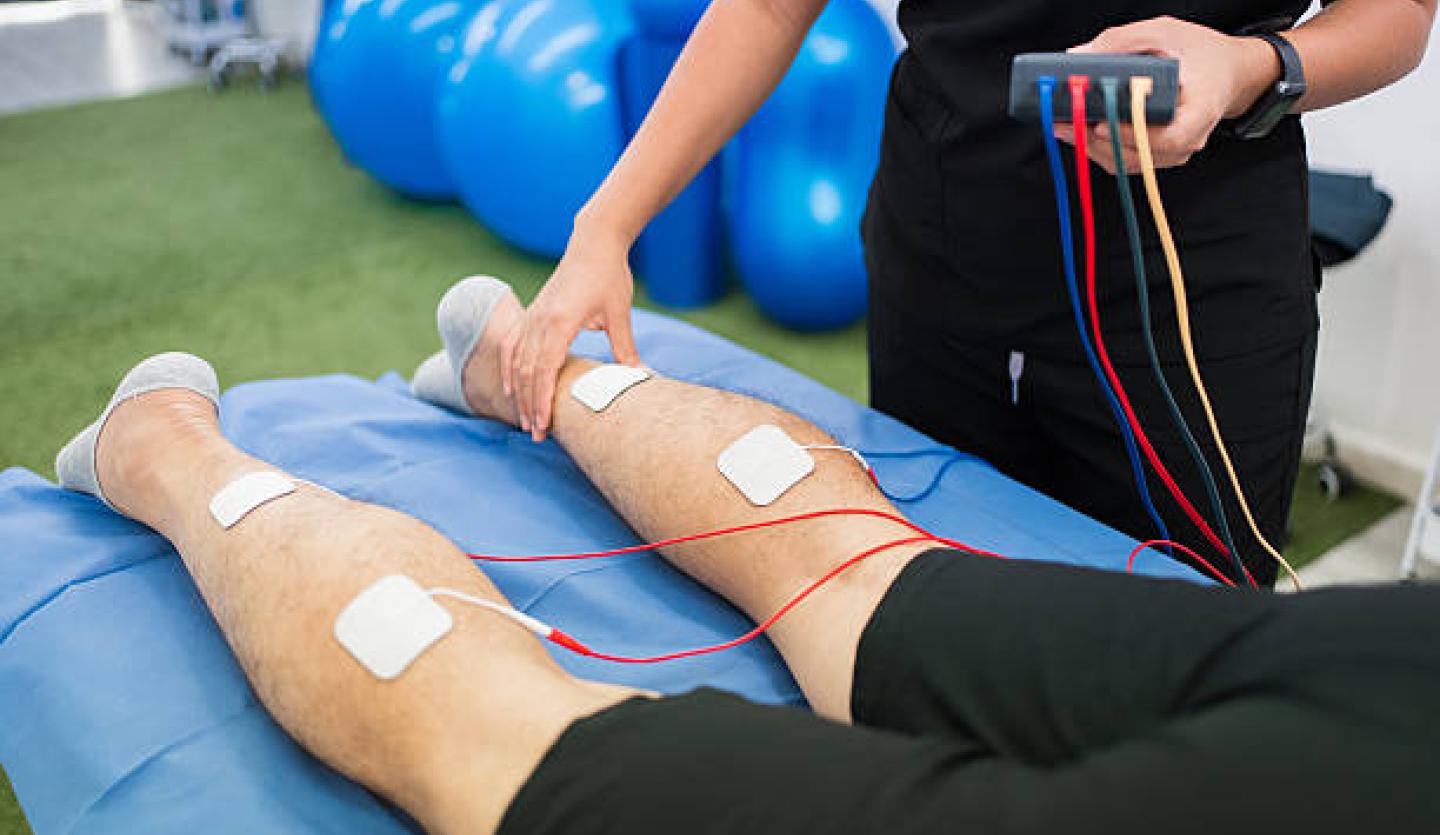
Electric muscle stimulation (EMS) also known as neuromuscular electrical stimulation is treatment that uses electrical impulses to create muscle contractions. This stimulation technique is used help strengthen muscles. “It can be helpful when there is weakness or difficulty activating a muscle after an injury or surgery,” said Dr. Moustafa.
This type of therapy is often used for muscle activation, strengthening, and neuromuscular retraining for athletes who may have an injury.
How Does Electric Muscle Stimulation Work?
With this method, electrodes are placed on the skin that send impulses that cause rhythmic muscle contractions, which are commonly felt as a tingling or pulsating sensation. EMS may help the muscles respond to natural signals that cause them to contract. This response can help strengthen or retrain a muscle after surgery or an injury.
Benefits of Electric Muscle Stimulation
As part of a physical therapy program, electrical muscle stimulation may help people deal with issues affecting the muscles including weakness, pain and spasms. The main benefits include:
- Muscle Strengthening
- Pain Management: Helps reduce muscle spasms and release endorphins
- Prevents Atrophy – Keeps muscles active, especially if a patient is immobilized in a brace or cast
- Enhances Warm-Ups and Recovery Sessions for Athletes
- Rehabilitation: Helps improve functionality
EMS has also been used to help treat various conditions that affect muscle strength including:
- Spinal cord injuries
- Muscle weakness after surgery
- Strokes
- Muscle control issues
Risks/Side Effects of Electrical Muscle Stimulation
There are few risks related to electrical muscle stimulation. Some people experience a “tingling or prickling” sensation and muscle twitching while the therapy is being performed. The most common risks include tissue burns, skin irritation or muscle soreness if the intensity is too high.
It is important to note that electrical muscle stimulation may not be appropriate for everyone and is not recommended for patients who:
- Are pregnant
- Have implanted pacemakers
- Have heart conditions
- Have epilepsy
Kinesio Taping
Kinesio tape is a thin, flexible tape that is designed to aid muscle movement, help with swelling, and support rehabilitation. It is commonly used to relieve pain, reduce inflammation and provide support to joints and muscles.
This taping method was developed based on Kinesiology, the study of movement including exercise and activity for health, daily living and sports performance, and it combines disciplines including biology, physics, and psychology to understand body movement.
How Does Kinesio Taping Work?
Unlike traditional athletic tape that restricts movement, Kinesio tape stretches and moves with the body. Often used for short-term symptom relief, the goal is to reduce pain and support mobility.
Kinesio tape can be applied to almost any part of the body where muscles, joints, or ligaments need support, including shoulders, knees, lower back, ankles, wrists, elbows, and calves. It can also be used for more precise areas like the neck or fingers.
When the tape is applied properly, it offers mechanical support and circulatory benefits to the targeted (taped) areas.
This technique is not just for athletes. Anyone can benefit from kinesio taping for support and to help alleviate muscle tension.
Benefits of Kinesio Taping
This method of treatment can provide various (often short-term) benefits including:
- Providing Support: It can add dynamic stability during movement.
- Pain Relief: It helps reduce discomfort in muscles and joints by alleviating stress from the affected tissues.
- Reducing Swelling: It can be used after surgery or injury to reduce swelling.
- Rehabilitation: It is often used to provide additional support during movement retraining
Risks/Side Effects of Kinesio Taping
There are very few risks related to Kinesio taping. However, to ensure that this technique is used effectively and achieves the best results, it should be used under the professional guidance of a physical therapist or orthopedic specialist. It should not be used if you:
- Are allergic to adhesives
- Have open wounds, skin irritation, or rash
- Have deep vein thrombosis (DVT)
- Have serious medical conditions
Integrative Healing, Treatment, and Rehabilitation at Catholic Health
Whether you are seeking treatment after an injury, athletic enhancement and support, or relief from orthopedic pain, the experienced specialist at Catholic Health can help. Our trained professionals integrate proven holistic treatments, along with exercise and traditional therapies, to achieve the best outcome for your specific condition.
Learn more about our advanced and innovative services.
Sports Medicine
Orthopedics
Physical Therapy & Rehabilitation
Find Care at Catholic Health
Find a Catholic Health doctor near you or call (866) 695-4362.


 Find a Doctor
 Find a Location
 Programs & Services
 Appointments & Video Visits



 Edge
Edge Chrome
 Safari
 Firefox