Common symptoms include:
- A feeling of pressure, heaviness or fullness in the vagina or pelvis
- A visible or palpable bulge at the vaginal opening
- Constipation or difficulty completing a bowel movement
- Discomfort or pain during intercourse
- Lower back ache that worsens after standing or activity
- The sensation that something is bulging or falling out of the vagina
- Urinary leakage, urgency or difficulty emptying the bladder
You might experience worse symptoms at the end of the day, after periods of long standing or after physical activity. They tend to ease when lying down. If any of these symptoms affect your daily life, it is important to talk with your physician, regardless of how mild they feel.
What Causes Pelvic Organ Prolapse?
Prolapse happens when the pelvic floor can no longer support the organs it is meant to hold. There are several reasons those structures can stretch or weaken over time:
- Aging — Muscle and connective tissue strength naturally decline over time, regardless of childbirth history.
- Chronic pressure on the pelvic floor — Ongoing constipation, a persistent cough, frequent heavy lifting and obesity all place repeated downward pressure on the pelvic floor that accumulates over years.
- Family history — Some women inherit a weaker connective tissue structure, making prolapse more likely regardless of other risk factors.
- Menopause — Estrogen helps maintain the strength and elasticity of pelvic floor tissue. As levels decline after menopause, connective tissue weakens and prolapse becomes more likely.
- Prior pelvic surgery — Hysterectomy in particular can alter the support structures of the pelvic floor and increase the risk of vaginal vault prolapse.
- Vaginal childbirth — The most common cause. Pushing during labor puts significant strain on the pelvic floor. The risk increases with multiple deliveries, large babies, prolonged pushing, or the use of forceps or vacuum assistance.
Pelvic Organ Prolapse Diagnosis
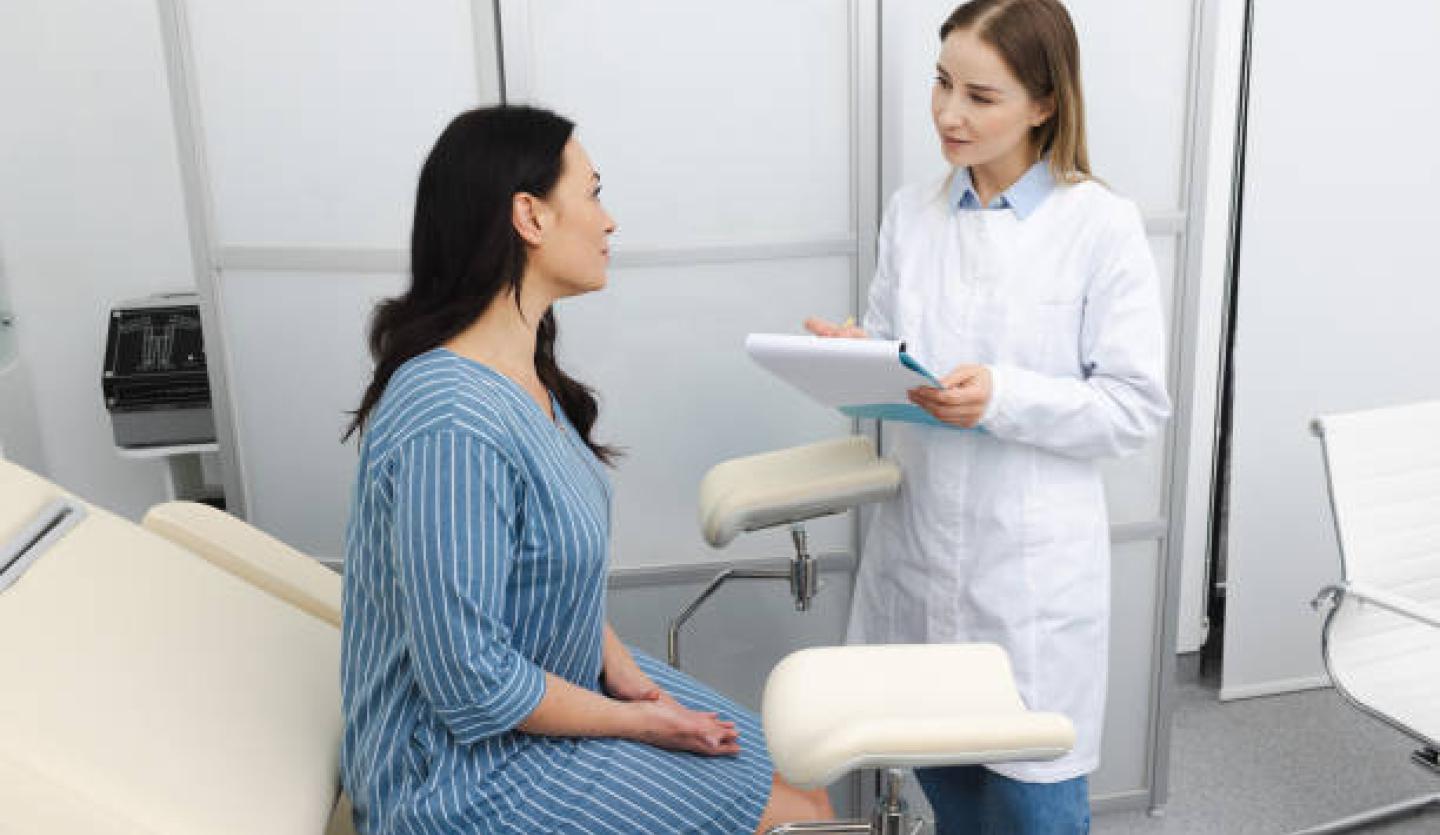
Diagnosis typically begins with a pelvic exam. Your physician will examine the vagina and surrounding tissues while you are relaxed and while you are straining. This allows them to see the full extent of any prolapse. The exam does not take long and most women will not experience any significant discomfort.
If needed, additional tests may include bladder function tests if you also have urinary symptoms, and a pelvic floor ultrasound or MRI in complex cases.
Your physician may also describe the prolapse by stage. Many physicians use a system called POP-Q, which looks at how far the organ has moved in relation to the vaginal opening. The stage helps your care team understand how advanced the prolapse is and which treatment options may help most.
Stage one means the organ has dropped slightly but is inside the vagina. Stage four means the organ has moved completely outside the vaginal opening. Most women fall somewhere between those stages. Your stage is only one part of the decision. Your symptoms, comfort, health and goals also guide our next step.
Pelvic Organ Prolapse Treatment Options
Treatment for pelvic organ prolapse depends on the type and stage, which symptoms are most bothersome and whether you plan to have more children. The goal is always to relieve your symptoms and restore quality of life. Many women do well with nonsurgical management. Others may benefit most from surgery.
Pelvic Floor Physical Therapy
For mild to moderate prolapse, pelvic floor physical therapy is often the first line of treatment. A trained pelvic floor therapist guides you through targeted exercises to strengthen the muscles supporting the pelvic organs. This goes well beyond the Kegel exercises most women have heard of.
A therapist can assess which specific muscles are weak or poorly coordinated and build a program around those gaps. Many women see meaningful improvement in symptoms with consistent therapy, and for some, it eliminates the need for further intervention.
Pessary Devices
A pessary is a small, removable silicone device inserted into the vagina to support prolapsed tissue and hold it in place physically. Pessaries come in a range of shapes and sizes. Your physician will fit you with the one best for you based on the type and degree of your prolapse. When properly fitted, you do not feel a pessary during normal activity.
“A pessary can be a life-changing option for women who are not ready for surgery or who are not good surgical candidates,” said Dr. Memon. “For many of my patients, it provides complete symptom relief, and they go on to use it for years with no issues.”
Pessary care is straightforward. Most women remove and clean the device at home on a regular schedule, or have it cleaned during routine office visits. Some women use a pessary as a permanent solution. Others use it as a bridge while preparing for surgery, or during pregnancy.
Surgical Treatment
We may recommend surgery when symptoms are severe and nonsurgical treatments have not provided enough relief. The type of surgery depends on which organs are involved and whether you still have a uterus.
Reconstructive procedures repair the weakened areas of the pelvic floor and return organs to their original positions.
- Sacrocolpopexy, which uses a mesh material to anchor the cervix or the vaginal vault to the ligament overlying the sacral spine, is commonly performed laparoscopically with small incisions and a shorter recovery.
- Colporrhaphy repairs the front or back vaginal walls through the vagina.
- Uterosacral ligament fixation reattaches the top of the vagina to the body’s own ligaments, preserving vaginal depth and function.
“Surgery for pelvic organ prolapse has advanced considerably,” said Dr. Memon. “Most procedures are minimally invasive and recovery is faster than patients expect. We use computer software and dynamic pictures to explain normal anatomy and anatomical changes leading to prolapse. This helps each woman understand her options so she can make the decision that fits her situation and her goals, not just her anatomy.”
Reduce Your Risk for Pelvic Organ Prolapse
Not all prolapse is preventable, but certain habits reduce the strain on the pelvic floor over time. Daily pelvic floor exercises help strengthen the muscles before symptoms appear. Managing your weight, treating chronic constipation, avoiding smoking and protecting your pelvic floor when lifting all help. Women who have had vaginal deliveries and those approaching menopause are the most likely to benefit from being proactive.
If you have pelvic pressure, bladder leaks, bowel problems or a bulge near the vagina, a Catholic Health physician can help.
Our urogynecologists and pelvic floor specialists treat pelvic organ prolapse at every stage. We work with you to find an option that fits your symptoms, health and life.


 Find a Doctor
 Find a Location
 Programs & Services
 Appointments & Video Visits



 Edge
Edge Chrome
 Safari
 Firefox