What to Expect During a Lung Cancer Screening
A lung cancer screening uses a low-dose CT scan, also called LDCT. The scan uses X-rays to take detailed pictures of your lungs. The process has five steps, from your first conversation to your yearly follow-up.
Step 1: Talk with Your Physician
Screening starts with a visit to your physician. Together, you will review your age and smoking history to confirm you qualify. You will also talk through the benefits and risks of screening, including the chance that you may need follow-up tests. If you smoke, your physician can also connect you with support to quit.
Your physician will then place an order for your scan. Most private insurance plans must cover a yearly screening at no cost to you if you meet the guidelines. Medicare preventive care covers screening for people who qualify between the ages 50 to 77. Check with your plan to confirm your coverage.
Step 2: Get Ready for Your Scan
Preparing for a scan is simple. You do not need to fast or stop taking your medications. There are no needles and nothing to swallow. Wear comfortable clothing without metal zippers, snaps or buttons and leave jewelry at home.
Step 3: Have Your Scan
A technologist will help you lie on your back on a padded table. You may get pillows or straps to help you stay still. Then you will raise your arms above your head. The table slides through the scanner, which is shaped like a large doughnut. It is not a long tunnel like an MRI machine. The technologist will ask you to hold your breath for 5 to 10 seconds while they take images.
The scan takes only a few minutes, and you will not feel anything. LDCT uses five times less radiation than a standard chest CT scan. That amount is less than half of the natural radiation you are exposed to each year from your environment.
You can drive yourself home after the scan and go right back to your day.
Step 4: Get Your Results
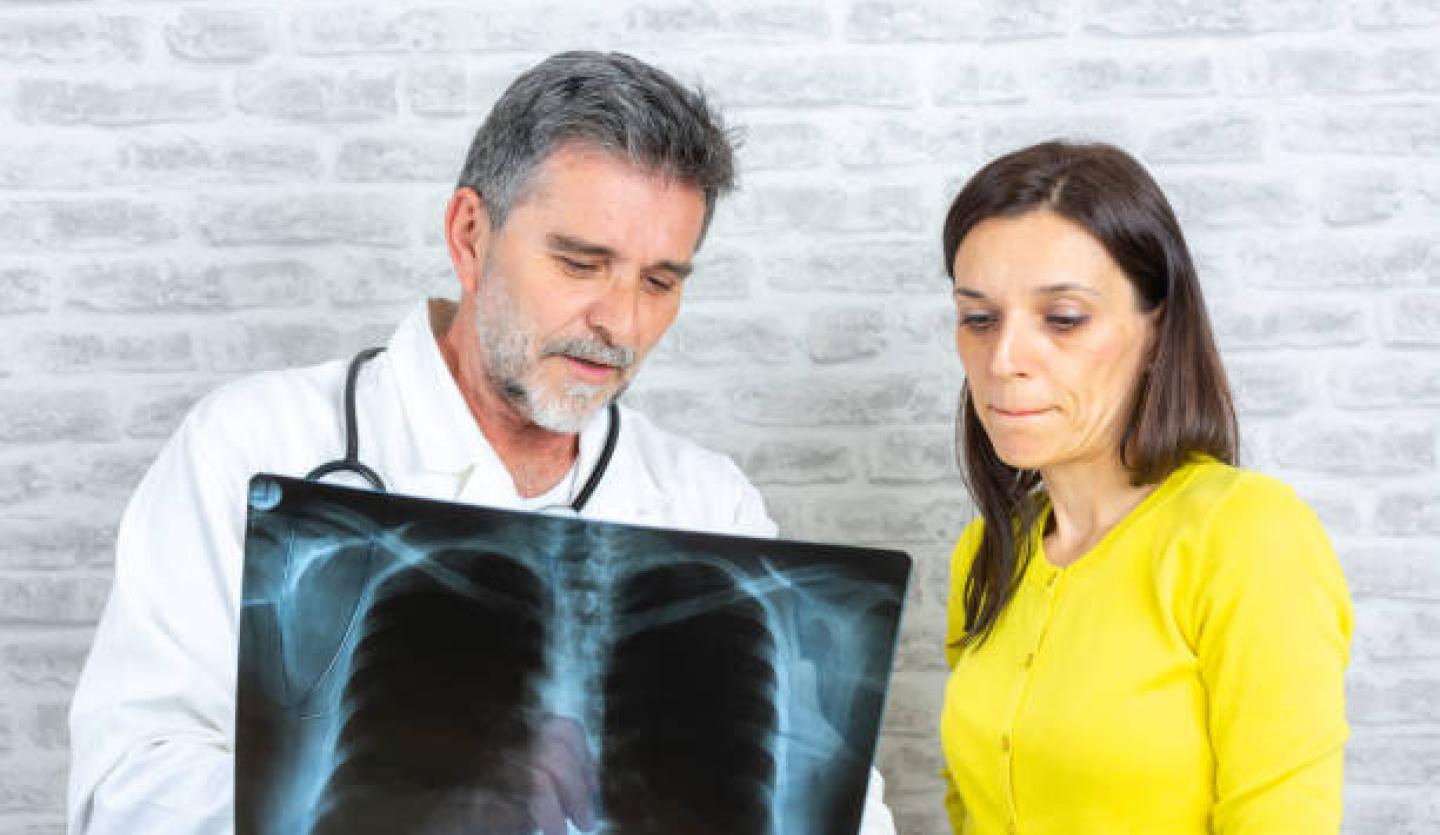
A radiologist will review your images, and your physician will explain what they mean and what comes next. Your report will fall into one of these general groups:
- Normal or benign: Your scan shows no signs of cancer or only harmless findings. You will return for your next yearly scan.
- Probably benign: Your scan shows a small spot with a very low chance of cancer. Your physician will likely recommend a short-term follow-up scan based on what is seen, perhaps in 3 or 6 months.
- Suspicious: Your scan shows a spot that needs a closer look. You may need another CT scan, a PET scan or a biopsy.
Finding a spot is common and it rarely means cancer. More than 95% of lung nodules are not cancer. Many come from old infections or scar tissue. Screening can also show other health concerns, such as emphysema or calcium buildup in the arteries of your heart, which may warrant further workup or treatment.
“Waiting for results can feel like the hardest part,” said Dr. Ipe. “When patients hear their scan came back clear, you can see the weight lifted. Many of my patients decide right then that it is time to quit smoking and they finally feel ready to do it.”
Step 5: Return Every Year
One scan is not enough. Lung cancer screening works best when you repeat it every year for as long as you meet the guidelines. Yearly scans let your care team compare images over time and spot changes early.
Are You Eligible for Lung Cancer Screening?
Catholic Health follows lung cancer screening guidelines from the U.S. Preventive Services Task Force (USPSTF). Lung cancer screening eligibility is based on your age and smoking history. You may qualify if you:
- Are between 50 and 80
- Have a smoking history of at least 20 pack-years
- Currently smoke or quit within the last 15 years
- Have no signs or symptoms of lung cancer
How to Calculate Pack-Years
Pack-years measure how much you have smoked over time. Multiply the packs you smoked per day by the number of years you smoked. Each of these equals 20 pack-years:
- 1 pack a day for 20 years
- 2 packs a day for 10 years
- Half a pack a day for 40 years
What If You Quit More Than 15 Years Ago?
The American Cancer Society guidelines do not limit how long ago you quit. They recommend yearly screening for people ages 50 to 80 with at least 20 pack-years who smoke or used to smoke. If you quit more than 15 years ago, ask your physician whether screening makes sense for you. Keep in mind that your insurance may still follow the 15-year rule.
Schedule Your Lung Cancer Screening on Long Island
Catholic Health offers lung cancer screening at six hospitals. To schedule your screening, call (844) CHS-LUNG (844-247-5864) or email LUNG@chsli.org. Learn more about our lung cancer services.
FAQ/People Also Ask
Do I need a referral for a lung cancer screening?
Yes. Your physician will meet with you to confirm that you qualify and then place an order for your scan.
How often should I get a lung cancer screening?
Once a year for as long as you meet the guidelines. Yearly scans help your physician spot changes early.
Can I get screened if I never smoked?
Current guidelines do not recommend screening for people who never smoked. If you are worried about your risk, talk with your physician about your symptoms, family history and other exposures.


 Find a Doctor
 Find a Location
 Programs & Services
 Appointments & Video Visits



 Edge
 Chrome
 Safari
 Firefox