Are Fitness Trackers Effective?
Research suggests that fitness trackers can motivate people to increase their physical activity. Studies show that people who wear fitness trackers often walk more steps each day and engage in more moderate-intensity exercise than those who do not use these devices.
Dr. Graham adds, "You can't manage what you don't measure. Often phrased as - if you can't measure it, you can't improve it - this widely cited adage emphasizes that tracking performance metrics is essential for control and improvement.”
The effectiveness of these devices, however, depends on how you use the information. Trackers work best when they help you set realistic goals, notice patterns in your activity and sleep, and stay accountable to your health goals. They become less effective when the data creates anxiety or when you ignore what your body tells you.
Are Fitness Trackers Necessary?
Fitness trackers are not necessary to improve your health. You can reach your wellness goals without wearing a device. What matters most is moving more, getting quality sleep and paying attention to your body’s signals. A tracker can help you measure your progress, but it cannot replace consistent habits. If a device motivates you and helps you stay accountable, it may help.
What are the Different Types of Trackers?
Fitness trackers range from simple devices like pedometers, which track only steps, to sophisticated wearable devices. Today, you have several choices:
- Basic activity trackers count steps and estimate distance. These devices are affordable and easy to use.
- Fitness watches track steps, heart rate, calories and often include GPS for outdoor activities. Many offer smartphone notifications and other features.
- Smart rings have similar features to wrist-worn trackers but in a smaller design.
- Advanced health monitors measure heart rate variability, blood oxygen levels, body temperature and sleep stages. These devices provide more detailed health information.
How Do You Interpret the Data?
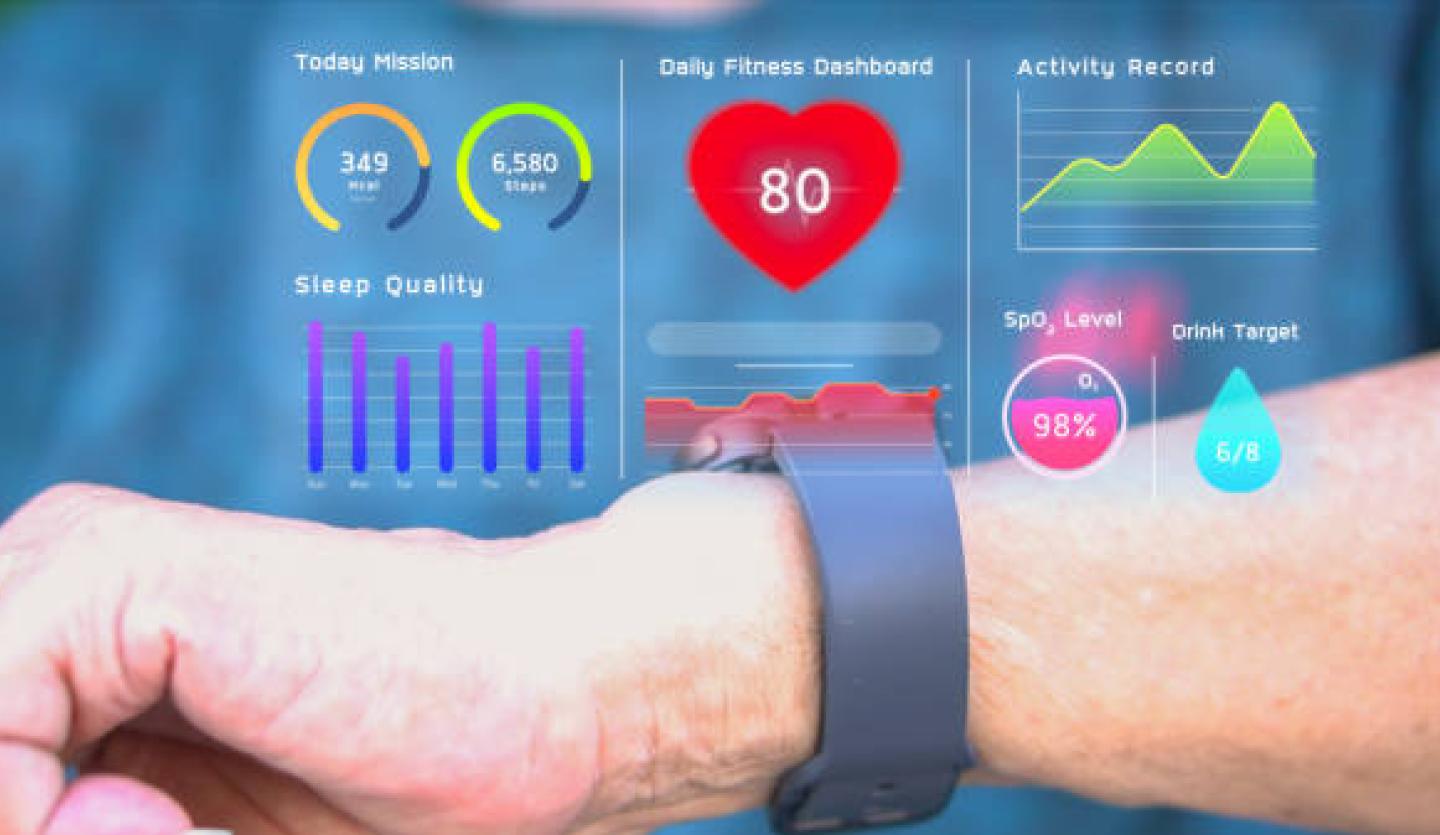
Fitness trackers provide many types of data. Focus on patterns over time rather than individual numbers.
Heart Rate and Resting Heart Rate
Heart rate shows how fast your heart beats. Resting heart rate shows your baseline when your body is relaxed. Over time, a lower resting heart rate can mean improved fitness. For most adults, a normal resting heart rate ranges from 60 to 100 beats per minute, though athletes may have resting heart rates as low as 40 to 60 beats per minute.
Heart Rate Variability (HRV)
HRV reflects how your body responds to stress and recovery. Your personal trend matters more than the number itself. A drop below your normal range may signal that your body needs more rest or that something is affecting your recovery.
Steps and Distance
Step counting is one of the most common tracker features. The widely cited goal of 10,000 steps per day originated from a marketing campaign, not from scientific research. More recent studies suggest that health benefits begin at lower step counts and that even modest increases in daily steps can improve your heart health.
Calories Burned
Calorie burn estimates are one of the least accurate tracker metrics. These calculations are based on algorithms that use your heart rate, movement and personal data such as age, weight and sex. Because metabolism is different for everyone, tracking calories burned is difficult for any device.
Blood Oxygen Level
This metric estimates the amount of oxygen in your blood. Normal blood oxygen levels can range from 95 to 100 percent. If your tracker shows consistently low blood oxygen readings, or if you experience symptoms such as shortness of breath, chest pain or unusual fatigue, contact your physician.
Body Temperature
Advanced trackers measure body temperature trends, which can help detect illness. Small changes in body temperature are normal, but a sudden increase may be a sign of illness or infection.
Sleep Duration, Quality and Stages
Many fitness trackers estimate your sleep by detecting movement and changes in heart rate throughout the night. Most trackers divide sleep into different stages:
- Light sleep makes up most of your sleep time. During this stage, your body relaxes and your brain activity slows.
- Deep sleep is when your body repairs and restores itself. This stage helps support your immune system, physical recovery and memory.
- REM sleep stands for rapid eye movement. This is the stage when most dreaming occurs. REM sleep helps support learning, mood and brain function.
Fitness trackers provide helpful estimates but are not as accurate as the sleep studies physicians use to diagnose sleep disorders. If your tracker consistently shows poor sleep quality and you feel tired during the day, talk to your physician about these patterns.
Readiness and Recovery Scores
Newer fitness trackers combine multiple metrics — such as heart rate variability, resting heart rate, sleep quality and recent activity — into a single recovery or readiness score. These scores tell you how prepared your body is for physical activity. A high recovery score suggests your body has recovered well from recent activity. A low score means that your body needs rest or lighter activity.
6 Ways to Track Your Health without a Device
You can monitor your health and fitness without a wearable device. Many people improve their activity levels, sleep quality and overall wellness using simple, low-tech methods. Try these tips:
- Pay attention to how you feel — Notice your energy levels, mood, sleep quality and physical recovery. These subjective measures provide more meaningful information than any tracker data.
- Track activity manually — You can record your workouts, walks or other physical activity in a journal or calendar.
- Check your resting heart rate without a device — You can measure your resting heart rate by placing two fingers on your wrist or neck and counting your pulse for 60 seconds. Do this first thing in the morning before getting out of bed.
- Set simple activity goals — Instead of counting steps, commit to walking for 20 minutes each day, taking the stairs instead of the elevator or parking farther from the entrance.
- Prioritize consistent sleep and wake times — You can improve your sleep without tracking it by going to bed and waking up at the same time each day, creating a relaxing bedtime routine and limiting screen time before sleep.
- Monitor your recovery — Pay attention to muscle soreness, how tired you are and how you feel during workouts. If you consistently feel tired or unable to complete your exercise routine, your body may need more recovery time.
“The value of a fitness tracker is not in the device itself, but in how you use the information,” said Dr. Graham. “When you notice changes that concern you or patterns that persist, bring that information to your physician. We can help you understand what it means in the context of your overall health.”
If you have questions about your fitness tracker data or want to become more active, a Catholic Health physician can help. Learn how to safely start an exercise program or discuss your activity goals, heart health and sleep with your physician.
Our Integrative Medicine program features a team of specialists who can work with you to design a personalized health program that will empower you to take control of your health.


 Find a Doctor
 Find a Location
 Programs & Services
 Appointments & Video Visits



 Edge
Edge Chrome
 Safari
 Firefox