Pool Safety: What to Know Before the First Splash
At this time of year, pools are open in backyards, rec centers, apartment buildings, hotels and more. When families are looking for a good time, poolside is often a top attraction. When your family works together to stay smart in the pool, your activities in the water will be fun — and much safer. Here are a few tips to do it.
Make Way for the “Water Watchers”
Never assume someone else is actively supervising kids in the pool. Even the lifeguards cannot always have a constant eye on your children. Although close supervision by parents or caregivers is key, you will still want to have someone whose only responsibility is water safety for kids. Have water watchers take “shifts” to help them avoid fatigue and distractions.
Build a Barrier to Save Lives
In a perfect world, every pool, wherever it is, would have a barrier around it. If you have a private pool at your home, you will need a barrier, such as a four-sided fence at least four feet high. It should fully surround the pool and separate from the house, with a self-closing, self-latching gate.
Beach Safety: Sun, Sand and Savvy Swimming
Whether you live near a beach or are heading to one for a family vacation this summer, a few safety tips will make for fun in the sun.
Swim Near a Lifeguard
Well-trained lifeguards spot hazardous conditions at the beach, tell swimmers how to stay safe, respond to emergencies and give medical care when needed. Lifeguards are there to keep swimmers from drowning and protect them from injury. When you first get to the beach, check with the lifeguards to learn where the designated swim areas are and any safety advice or alerts.
Understand Rip Currents
Rip currents are narrow bodies of fast-moving water. They are powerful enough to pull even strong swimmers far from shore. To avoid being caught in a rip current, always:
- Choose a beach with lifeguards.
- Check the local beach forecast before you go.
- Check for warning flags.
- Look for a channel of choppy, churning water or a gap in the breaking waves.
Protect Your Skin
Lower your risk of sun damage by staying in the shade under a tree, umbrella or other shelter. Protect your skin with water-resistant sunscreen and reapply every 40-80 minutes while swimming. Remember that water and wet sand reflect UV rays onto your skin. This increases your exposure to sun damage even when you’re in the shade.
Boating Safety: What to Know Before You Ride the Waves
Whether you are riding in a motorized boat, wakeboarding or paddling a kayak, stay safe by using the correct equipment and being prepared.
Wear a Life Jacket
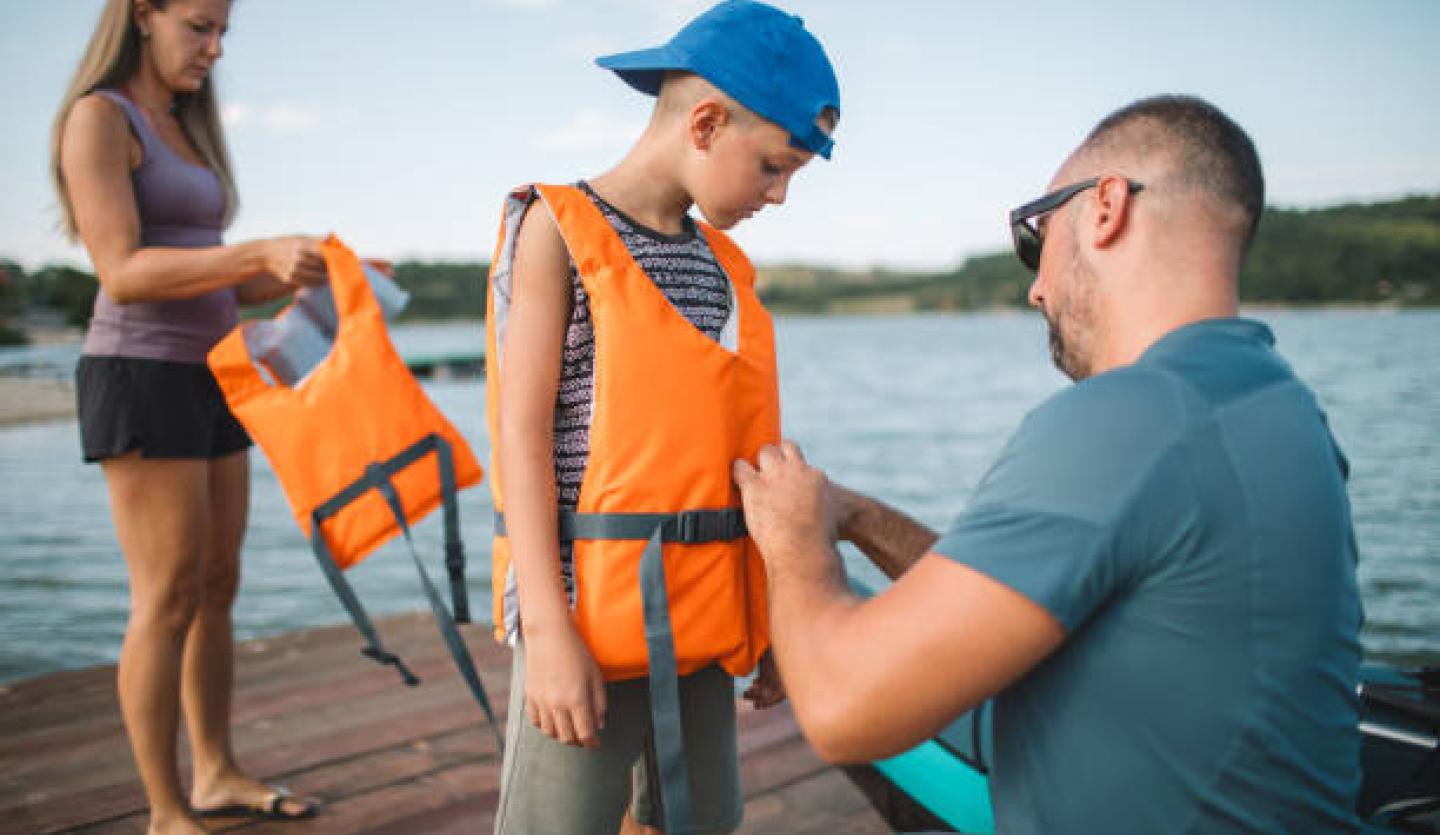
All boaters should wear life jackets any time they are on a motorized or non-motorized boat. Even strong swimmers should wear them because when someone falls out of a boat, they may become confused or unconscious. Life jackets can keep your head above water so you can breathe and be rescued more easily. Every child should wear one, and all life jackets need to fit correctly and be Coast Guard-approved.
Do Not Mix Drinking and Boating
Alcohol slows reaction time and affects coordination, balance and judgment. When you add sun exposure and heat to the mix, the results are even more dangerous on a boat, even if you are not driving it.
Kids on Board
Have the “water watcher” make another appearance when you are boating to make sure kids follow these tips when in a moving boat:
- Stay seated
- Keep hands and feet inside the vessel
- Always hold onto the boat with one hand
- Do not run
Water Safety Applies to Everyone
“Even the best swimmers need to follow safety tips. It is important to know your limits, especially in open water, which is not the same as being in a pool,” said Dr. Fuentes.
Every pool, beach and boat holds the promise of enjoyable new summer adventures. Your family’s best experiences will come from staying safe in the water.
Find Care at Catholic Health
Find a Catholic Health physician near you. Or call 866-MY-LI-DOC (866-695-4362).


 Find a Doctor
 Find a Location
 Programs & Services
 Appointments & Video Visits



 Edge
Edge Chrome
 Safari
 Firefox