

 Find a Doctor
 Find a Location
 Programs & Services
 Appointments & Video Visits
Stay Safe, Ride Smart
After being inside all winter, spring is the time of year that kids love to get outside and play! For kids and adults too, outdoor activity often includes bike or scooter riding. While these activities combine two positive factors - fresh air and exercise – they can also be the cause of accidents and injuries.
According to the National Highway Traffic Safety Administration, children ages 5–14 account for the largest number of bicycle-related emergency department visits in the U.S.
Biking and riding a scooter are fun and healthy activities for kids, so avoiding these activities just to avoid injury does not seem like a plausible solution. The good news is that wearing a helmet remains one of the best ways to prevent serious head injuries.
The Centers for Disease Control and Prevention (CDC) reports that helmets reduce the risk of serious head injury by about 60% and traumatic brain injury by about 53% for bicyclists.
Kids Should Always Wear a Helmet When Riding a Bike or Scooter
Children have developing brains that are more vulnerable to injury. Scooters can be unstable to ride and bikes can be difficult to maneuver at times, so they are more prone to accidents with children. Accidents involving bikes, scooters, and more recently, e-bikes and e-scooters, are major causes of severe head injuries in children.
Each year in the United States, about half a million kids are seriously injured in bicycle-related accidents. These accidents are the leading cause of head injury for children under the age of 14, leading to approximately 20,000 hospital emergency room visits a year.
Many bicycle and scooter-related accidents result in a serious brain injury or death. Most of those injuries could have been avoided if a helmet was worn.
What Happens If a Child Falls Off a Bike Without a Helmet?
Bike accidents that occur without a helmet can have devastating consequences. If a child (or anyone, for that matter) is not wearing a helmet, even a simple fall can lead to a severe head injury. If your child is riding a bike or scooter and not wearing a helmet, an accident has the potential to cause the following injuries:
- Concussion
- Skull fracture
- Traumatic brain injuries
- Facial fracture
- Death
Even a fall from a bike going at a low speed can cause injury if the head hits the pavement, sidewalk, or another hard surface.

“Wearing a helmet on a bicycle, scooter or an e-bike is essential to preventing a severe traumatic brain injury. Helmets are the best defense for preventing serious head injuries, lifelong disabilities, and even death when riding a bike or scooter of any kind.”
E-Bike Injuries are Increasing and More Dangerous
Electric bike (e-bike) injuries among teens have surged, with 13-to-16-year-olds involved in over half of all bicycle collisions, often leading to more surgeries and hospitalizations than traditional bikes.
The American College of Surgeons (ACS) reported that the rate of e-bike injuries is increasing every year, with injuries that are more severe than those from manual bicycles. Head injuries occur most frequently, with only a third of injured patients reported to wear helmets.
How Effective Are Bike Helmets at Preventing Serious Head Injuries?
Bicycle helmets save lives and prevent injuries. Helmets are one of the most effective injury prevention tools for children on bikes and scooters.
Statistics from the Centers for Disease Control and Prevention (CDC) and other safety organizations prove that helmets are the best way to prevent head and brain injuries. Wearing a helmet minimizes the risks of serious injury:
- Reduces serious head injuries by 60%
- Reduces traumatic brain injury by 53%
- Reduces the risk of skull fracture by 60-70%
- Reduces the number of bicyclists killed or seriously injured by 34%
Many helmet laws and safety awareness campaigns have helped to educate the public and significantly reduce fatal head injuries in children.
Does My Child Have to Wear a Helmet?
While statistics show that helmets can help prevent serious head injuries, in many states, wearing a helmet while riding a bike is the law.
There is no federal law in the U.S. requiring bicycle helmets, however 22 states have statewide helmet laws. In New York State, all bicycle riders up to age 14 are required to wear bike helmets certified by the Consumer Product Safety Commission (CPSC).
On Long Island, Suffolk County has stricter helmet laws than New York State. The county has mandated helmet use for all cyclists under the age of 18. This regulation is designed to reduce head injuries and fatalities, making Suffolk one of the most proactive counties in the state regarding cycling safety.
How Should a Child’s Bike Helmet Fit?
It is important that a helmet fits properly for it to be most effective. When purchasing a helmet, check that the label says: U.S. Consumer Product Safety Commission (CPSC) 1 certified. This means that the helmet has been tested for safety and meets the federal safety standard.
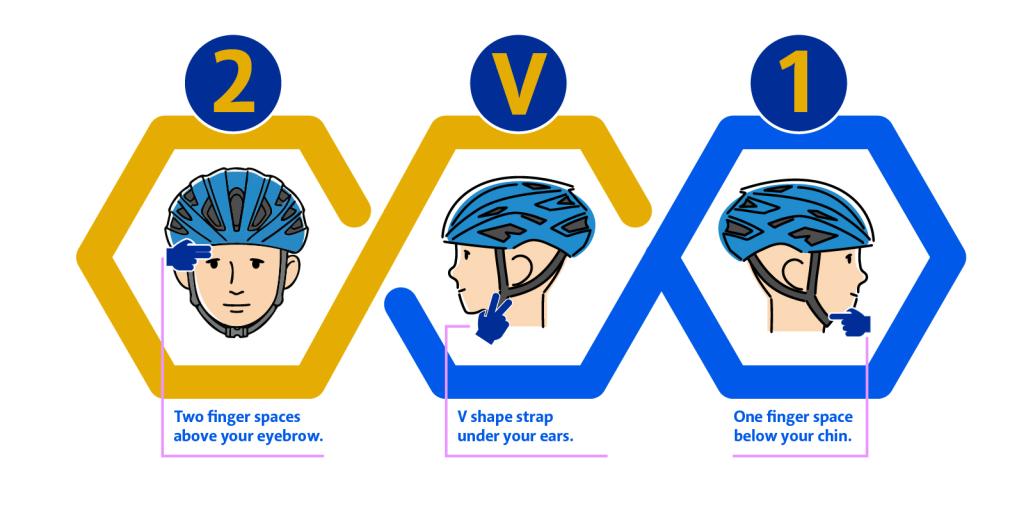
According to the CDC and the Bicycle Safety Helmet Institute (BSHI), these tips can help to ensure a helmet fits properly:
- The helmet should fit snugly all around, with no spaces between the foam and bike rider’s head.
- Position: The helmet should sit level on the head and low on the forehead— one or two finger-widths above your eyebrow.
- Side Straps: Adjust the slider on both straps to form a “V” shape under the ears.
- Chin Straps: Tighten the strap until it is snug, but comfortable.
- The helmet should not rock forward or backward, or side to side on the head.
Always check the helmet for any damage. Do not allow your child to use a cracked or broken helmet, or a helmet that is missing any padding or parts. Helmets should be replaced every five years.
Do Helmets Prevent Concussions?
Helmets can help to significantly reduce the risk of serious head injury. However, a helmet cannot completely prevent a concussion.
Helmets protect the brain by providing a stiff, outer shell that absorbs the energy from an impact, preventing it from penetrating the skull and causing severe injury. While it cushions the outside of the head, it cannot stop the brain from hitting the hard internal walls of the skull if the impact is forceful enough. This movement injures the brain and can affect brain function, usually for a brief period of time.
While there is no concussion-proof helmet, a bike helmet that fits properly can help protect your child or teen from a serious brain or head injury.
What Are the Signs of a Concussion?
Concussions can range from mild to severe. The symptoms of a concussion can be subtle and may not occur right away. After a bike or scooter accident, parents should watch for signs of a possible concussion in their child, which may include:
- Headache
- Dizziness
- Nausea or vomiting
- Confusion
- Sensitivity to light or noise
- Vision problems
- Balance problems
- Unusual fatigue or sleepiness
- Irritability and crankiness
- Trouble concentrating
These symptoms may occur hours or even days after the initial accident.
When Should My Child See a Doctor After Hitting Their Head?
If your child has a severe head injury, seek medical attention immediately. If you suspect that your child has a concussion, they should be evaluated by a medical professional. They can properly diagnose a concussion with a physical exam, a neurological exam and/or a specific concussion test. Children with a suspected concussion may need to be formally evaluated before returning to sports or physical activities.
The Concussion Management Program at Catholic Health specializes in the evaluation and treatment of teens and children with concussions. The concussion specialists monitor and provide comprehensive care from injury through recovery to ensure an eventual and safe return to sports and other activities.
“It is important to see a physician with specialty training in concussion management if you suspect a concussion may have occurred. Untreated concussions can cause pain, discomfort, and persistent symptoms that can impact a person’s quality of life, “said Dr. Gray.
Concussions aren't always preventable. But you can avoid other serious problems by getting the proper evaluation and specialized care for your child.
Parental Influence on Wearing a Helmet
Parents wearing helmets make a big difference! Parents have a significant influence on their children’s helmet-wearing habits and can set a positive example by consistently wearing helmets and emphasizing their importance.
- 86 % of parents who always wear a helmet say their children do too.
- Only 38% of children wear their helmets when their parents never wear them.
Children whose parents enforce strict helmet-use rules are much more likely to wear helmets consistently. This parental influence is critical in encouraging young bike riders to prioritize their safety.
A Simple Habit That Protects Your Brain
For children, teens, and adults, wearing a helmet is a simple and effective way to protect against severe injuries. Parents can set a positive example by always wearing helmets when they ride. Equipping children with helmets for their first bikes or scooters instills a habit of safety early on.
If your child experiences concussion symptoms after an accident, fall or sports injury, specialized evaluation and recovery guidance may be needed. The ThinkSMART!™ Concussion Management Program includes concussion education, baseline testing and concussion treatment. It is Long Island's leading resource for the evaluation and treatment of concussions.
Find Care at Catholic Health
Find a Catholic Health doctor near you. Or call 866-MY-LI-DOC (866-695-4362).
For convenient urgent care, visit a Catholic Health Urgent Care location.


 Edge
Edge Chrome
 Safari
 Firefox