

 Find a Doctor
 Find a Location
 Programs & Services
 Appointments & Video Visits
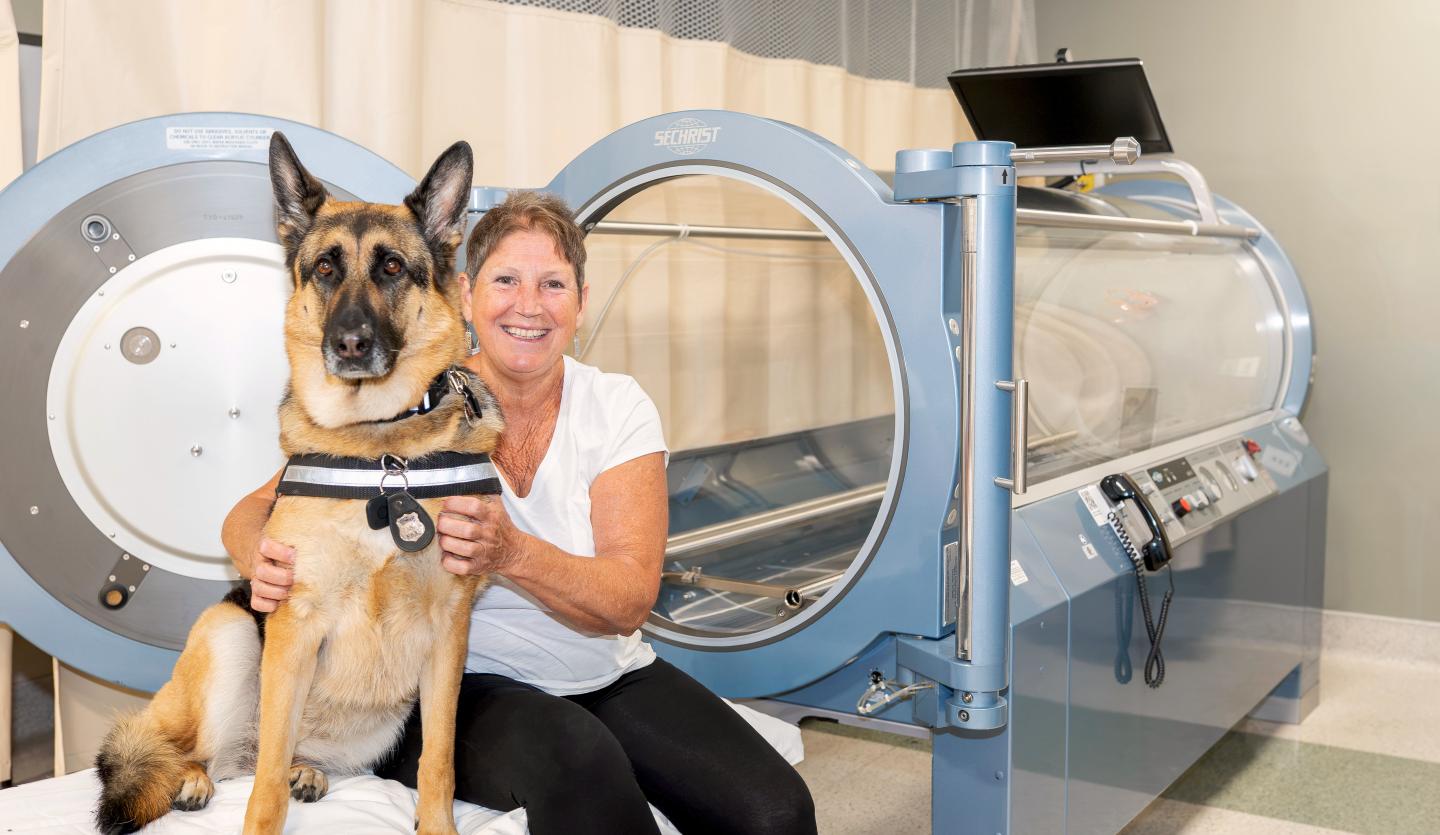
“I’ve experienced a lot of personal losses, but this was probably the saddest time of my life,” Pat Burke explained. “The feeling just lingered for months afterwards, you couldn’t get it off of you.”
On September 11th, 2001, Pat was an officer with the New York City Police Department who would spend a full year at Ground Zero. Primarily responsible for developing and staging the supply area under the direction of her commanding officer and in coordination with her late husband, retired NYPD Chief Robert Burke, and the New York Mets, the twenty-hour shifts consumed her, exhausting her body in a dust-filled landscape. “You’re inhaling dust, you’re sitting in dust, you’re bringing home dust, you’re eating it, you’re drinking it…it was everywhere,” she explained. But donated supplies needed to be coordinated, food and water stations had to be organized and dignitaries were visiting regularly. The work fell on their small team, and at the time, no one had considered how harmful the environment was to their well-being.
After finally retiring to her small farm in West Islip, Pat was able to enjoy time with her friends, her rescue animals and her service dog, Blue, a gentle and loyal German Shepard who keeps a mothering eye on the baby ducks and chickens. She felt strong and healthier than she ever had. The future seemed clear.
But by 2019, Pat had developed concerning symptoms and she suspected she may have a rectal tumor. After contacting her brother, a physician, she found her schedule was soon overflowing with appointments. “It was stressful,” she confessed, “but I was so grateful for the help.” Within five days, seven surgeons had confirmed her suspicion and recommended that treatment start immediately. First was chemotherapy, followed shortly after by radiation therapy and then a host of prescriptions and biopsies. “It was quite a ride,” Pat remembered.
Though the cancer was eventually cured, radiation therapy had left the 67-year-old with a new set of undesirable side-effects, including significant pain, daily rectal bleeding and bowel incontinence. This made it difficult for her to participate in the lifestyle she had previously enjoyed so much. Her radiation oncologist recommended that she try hyperbaric oxygen (HBO₂) therapy, which Pat enthusiastically agreed to.
Once approval was secured from the World Trade Center Health Program to cover the cost of treatments, Pat scheduled an appointment at the Center for Hyperbaric Medicine & Wound Healing at St. Catherine of Siena Hospital in Smithtown where the team made her feel comfortable right away. “Everyone in this hospital is so nice,” she praised. “Just so pleasant and welcoming.”
“Hyperbaric oxygen therapy has been very effective in regenerating cells and our patients who’ve had cancer have been doing particularly well with it,” explains Dr. Joshua Bozek, Chief Medical Officer at St. Catherine of Siena Hospital. “This often helps patients get back to their families and their everyday life much quicker.”
To date, Pat has received 90 HBO₂ therapy treatments and has experienced a significant improvement. With the bleeding almost under control and the pain continuing to improve, Pat is enjoying more energy and flexibility over her schedule. “I’m able to do more things now because I don’t have to worry so much about all that blood loss,” she explains. “I feel much better. I’m very grateful for the opportunity to be here and to have this treatment.”
There are currently sixty-nine cancers recognized by the World Trade Center Health Program and the list continues to grow. “Most of us don’t have any cancer in our family history. We were really healthy people, we were always in the gym, always running, always taking care of ourselves,” Pat explains. Today, she spends much of her time advocating for others who are experiencing similar health complications from their exposure during that time. “To me, it’s not work, it’s just helping your friends. I tell everyone about the hyperbaric chamber, it works!”

 Edge
Edge Chrome
 Safari
 Firefox