

 Find a Doctor
 Find a Location
 Programs & Services
 Appointments & Video Visits

Comprehensive Colorectal Care
At Catholic Health, our team of board-certified colorectal surgeons and multidisciplinary experts are committed to providing advanced, patient-centered care for colon and rectal conditions.
We use the latest technology and minimally invasive techniques, including laparoscopic and robotic surgery, to provide the most advanced treatments to help reduce recovery time and improve outcomes. If surgery is necessary, our team of experts will provide the highest standard of specialized care to treat your individual condition.
Advanced Surgical Treatments for Cancer of the Colon, Rectum and Anus
At Catholic Health, our colorectal surgeons are part of a multidisciplinary team that provides comprehensive care for patients with cancer. They work closely with oncologists, radiologists, pathologists, and other specialists to create a comprehensive treatment plan designed for each individual patient.
Surgical Treatment Tailored to Your Needs
At Catholic Health, we utilize a full spectrum of surgical techniques to treat our patients. Our approach is never one-size-fits-all; it is tailored to your specific diagnosis and medical history. Depending on the severity of your condition, your health, and your preferences, a minor procedure or minimally invasive surgery may be recommended as the best course of treatment.

Conditions We Treat
We provide comprehensive treatment for a wide range of colon, rectal, and anal conditions, including:
- Cancers of the colon, rectum and anus
- Inflammatory Bowel Diseases (Crohn’s Disease and Ulcerative Colitis)
- Diverticular Diseases: Diverticulitis and diverticulosis
- Rectal bleeding
- Anorectal Disorders: Hemorrhoids, anal fissures, fistulas, and abscesses
- Functional Disorders: Rectal prolapse, pelvic floor dysfunction, rectocele, and fecal incontinence
Diagnostic Screenings
Specialized tests and procedures are performed to collect additional information and help detect any diseases, polyps, or infections so your physician can accurately diagnose your condition and create a treatment plan. These tests may include:
- Colonoscopy: An examination of the colon, rectum and anus using a flexible tube and a tiny camera to detect (and in some cases remove) polyps, and search for cancer or other abnormalities.
- Proctosigmoidoscopy (Flexible or Rigid): Endoscopic examination of the sigmoid colon, rectum and anus
- Anoscopy: A diagnostic, office-based exam that looks inside the anus with a lighted scope.
- Radiology tests including MRI,CT Scans, X-rays, and Ultrasound: These tests show detailed images of different structures and internal areas; often used to determine if cancer cells have spread.

Surgical Approaches
Colon and rectal surgery includes a wide range of surgical interventions that treat conditions affecting the lower digestive tract, from hemorrhoids to diverticulitis to cancer.
Minimally Invasive Surgery
Less invasive than traditional surgical techniques, the laparoscopic and robotic approach offers a quicker, easier recovery for patients because there is less blood loss, less scarring, less pain, and a lower risk of infection. However, your surgeon will decide the safest surgical approach for your condition.
- Laparoscopic Colorectal Surgery: A minimally invasive surgical technique that uses a laparoscope to operate through several small incisions in the abdomen.
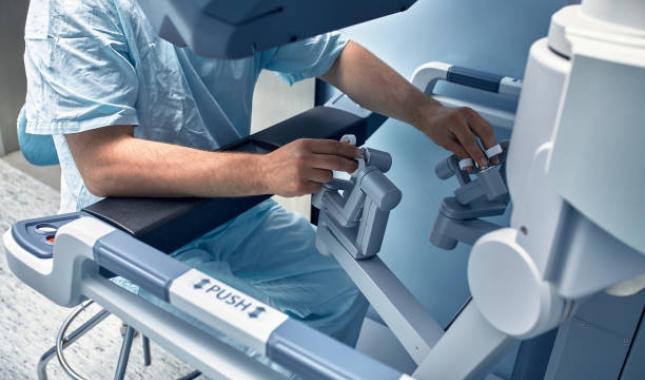
- Robotic-Assisted Colorectal Surgery: A form of minimally invasive surgery that uses a robotic arm that the surgeon controls from a console, offering our surgeons a 3D, high-definition view and a 360-degree range of motion when operating.
Traditional Open Surgery
Our surgeons prioritize minimally invasive methods whenever possible, however, traditional open surgery remains a vital and safe option. Depending on the individual patient, their condition, and health history, this may be the preferred choice for patients with extensive scar tissue from previous surgeries, very large tumors, or other complex anatomical factors.

 Edge
Edge Chrome
 Safari
 Firefox