

 Find a Doctor
 Find a Location
 Programs & Services
 Appointments & Video Visits

Palliative care is a medical specialty that is provided to people who have a serious illness. It is focused on improving quality of life by helping manage symptoms, ease pain, and treat side effects from treatments. With its holistic approach, palliative care not only focuses on the physical aspect of the disease, but also provides patients with the mental, emotional, and spiritual support they need in their journey towards healing.
Palliative care is best provided alongside other medical care while the patient is receiving curative treatment. The goal is to optimize the quality of life by providing an additional layer of help and support. A care team often includes physicians, nurse practitioners, specialists, nurses and social workers, along with spiritual leaders and family members.
Palliative care also offers support to caregivers and family who are impacted by a loved one’s illness.

Whether a patient has been recently diagnosed with a serious illness, is in the middle of treatment, or at the end of their life, palliative care can provide comfort and support to patients with an advanced illness.
What is the Difference between Palliative Care and Hospice Care?
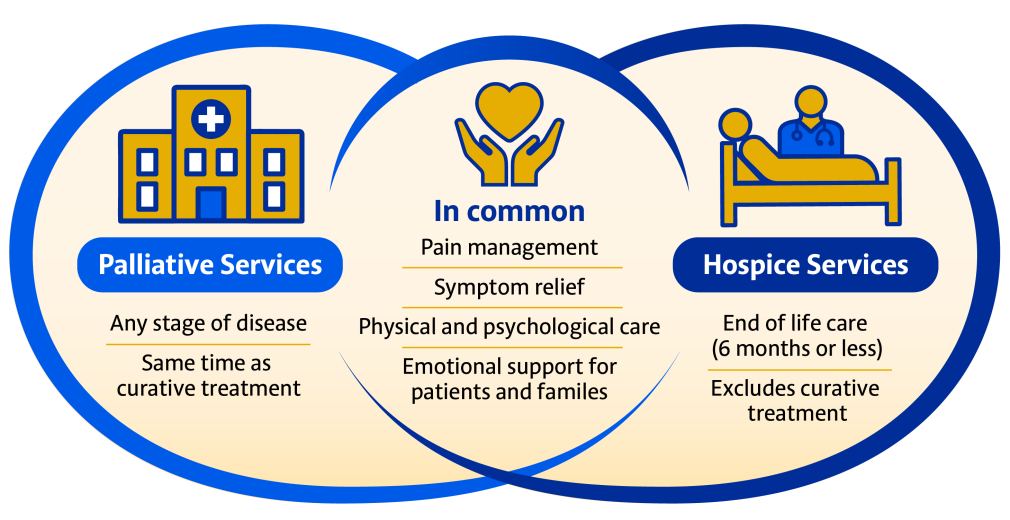
There is often some confusion regarding the term, palliative care. Palliative care is not the same as end-of-life or hospice care.
While both hospice and palliative care aim to provide care, comfort, pain relief, and a better quality of life for people who have serious health conditions, hospice is only provided when curative treatment is not an option and the life expectancy is thought to be less than six months.
On the other hand, palliative care is not limited to people who are nearing the end of their life or have a terminal diagnosis. Palliative care can be administered at any time during a person’s illness and is not tied to any expected outcome (whether a person is expected to live or pass away). It is offered to people with life-threatening or chronic illnesses and they can continue to receive treatments to try to cure their condition while receiving palliative care.
Key Components of Palliative Care
Palliative care focuses on improving quality of life. The essential components and comprehensive support it offers to patients and their loved ones may include:
Initial Assessment
An initial assessment of the patient’s physical symptoms, psychological needs and spiritual concerns to ensure the patient has a clear understanding of their disease, and to offer realistic options and goals that meets the patient’s values. This holistic approach to care emphasizes that the care plan is individualized and addresses the specific needs of each individual.
Symptom and Pain Management
To enhance quality of life, palliative care uniquely approaches symptom management. The palliative care clinicians are trained to recognize that the physical symptoms, including pain, can be exacerbated by emotional, social or spiritual concerns. Symptom management may include medications and interventional procedures, as well as holistic approaches like physical therapy, relaxation techniques and other supportive therapies.
Multidisciplinary Collaboration
Multidisciplinary teams work together to develop personalized treatment plans that address the physical, psychological, and emotional aspects of a serious illness.
Emotional Support
Palliative care provides counseling and emotional support to patients and their families to help them navigate the complex emotions associated with severe or chronic illness and end-of-life care.
Care Coordination
Palliative care teams coordinate care across multiple settings, including hospitals, assisted living facilities, rehabilitation centers, home, and hospice care. They manage the communication between health care providers and facilitate access to resources and support services.
Family Meetings
Palliative care clinicians are trained to recognize that the caregiver and the family are an essential part of the treatment journey. If permissible by the patient, families are encouraged to participate in the care plan. This is achieved through family meetings - allowing patients, families, and health care providers to discuss treatment options, preferences and care goals.
Advance Care Planning
Advance care planning helps patients to make informed decisions about their future medical care and end-of-life preferences.
It is a tool to protect the patient voice when it matters the most. It is not only part of the treatment plan for the patient, it also protects the caregiver from the burden of making difficult decisions for their loved ones.
Eligibility for Palliative Care - When do Doctors Recommend Palliative Care?
Palliative care can be integrated alongside curative treatments to enhance overall well-being. Seeking palliative care soon after a serious diagnosis can help patients and families plan for the future and improve their quality of life.
Rule of thumb: When the diagnosis and the disease progression significantly affect your quality of life, talking to a palliative care specialist is essential to shift the focus to what matters most, the human over the diagnosis.
Signs that palliative care may be necessary and quality of life is significantly affected include:
- Frequent hospitalizations or hospital visits
- Chronic symptoms including pain, nausea, or fatigue
- Emotional difficulty coping with the illness including anxiety or depression
- Decline in appetite
- Difficulty sleeping
Discussing palliative care programs with your health care provider can provide valuable insight and help you make informed decisions about your treatment plan. Palliative care specialists can assist with advance care planning and discuss the impact of serious illness on daily life.
Who Provides Palliative Care?
A palliative care team may include physicians, nurses, social workers, psychologists, dieticians, spiritual advisers, and others who collaborate with the patient and family to create a plan aligned with treatment goals and management of the patient’s condition.
Palliative providers also collaborate with other medical specialists caring for the patient throughout the course of treatment and beyond.
Where Do You Receive Palliative Care?
Palliative care can provide support across various settings to ensure essential care for patients and their families during challenging times. It may be offered in a variety of locations, including:
- Dedicated Clinic or Physician’s Office – Palliative care is often offered in a clinic setting or doctor’s office.
- Hospital - Palliative care specialist can see patients while they are in the hospital to help treat pain or other symptoms.
- At Home – Palliative care can be administered in the comfort of a patient’s home.
- Assisted Living Facility - Many nursing homes and assisted living facilities have specialists who can offer palliative care.
Palliative care can provide comfort and support and help to enhance the lives of patients and families in multiple settings.
Palliative Care Services at Catholic Health
Palliative care experts at Catholic Health offer guidance, compassion and support for anyone with a chronic or serious illness. We work with you and your loved ones to address the physical, spiritual and emotional challenges that serious illness can bring. Our support services include pain and symptom management, family meetings and outpatient care. Learn more about Palliative Care at Catholic Health.

 Edge
Edge Chrome
 Safari
 Firefox