
Skip navigation

Colon cancer can feel like a topic for “someday,” especially when you feel healthy and life keeps you busy. Still, many people first notice colon cancer symptoms through small changes that seem easy to explain, until they show up again. You deserve clear, practical guidance on what to watch for, what may increase your risk, and how screening and prevention fit into your health plan.

And it is worth talking about now, not later, because colon and rectal cancer have become more common in adults under 50, according to the American Medical Association (AMA).

Maybe you notice a streak of blood and hope it has a simple cause. Maybe your bathroom routine changes and never quite returns to normal. Maybe you feel more tired than usual and cannot put your finger on why. There is no need to jump to the worst-case scenario, but you also should not ignore what your body tells you.

Colon cancer can start quietly, and that is why early intervention can make a real difference. When you know your risk, stay current with screening and talk about your symptoms with your physician, you give yourself the best chance to catch problems early and treat them with more options.

What Is Colon Cancer?

Colon cancer starts in the colon (the large intestine). You may also hear it discussed alongside rectal cancer as colorectal cancer. The colon and rectum connect and we often screen and treat them in similar ways.

In many cases, colon cancer begins as a polyp, which is a growth on the inner lining of the colon. Most polyps are not cancer, but some types can become cancer over time. That is one reason screening matters.

Colon cancer is a major health issue across the United States. The American Cancer Society estimates that in 2026, there will be 108,860 new colon cancer cases and 49,990 new rectal cancer cases.

Colon Cancer Symptoms: What to Watch for

Colon cancer does not always cause significant symptoms early on. You may feel well overall and still notice a change that does not seem like a big deal at first. If any of the symptoms below show up, especially if they return or start to feel like your new normal, it is important to reach out to your physician.

  • A bowel habit change that lasts (constipation, diarrhea or both)
  • Abdominal pain, cramps or pressure that does not go away
  • Blood in stool or rectal bleeding
  • New fatigue
  • Stool that looks narrower than usual
  • Unexplained weight loss

Keep in mind that many of these symptoms can also come from non-cancer causes, such as hemorrhoids, anal fissures, diverticulosis or irritable bowel syndrome (IBS).

Dr. Hegde

“I tell patients that your body sends signals for a reason. If a change lasts more than a short stretch of time, we can check what is causing it and help you understand what to do next.”


Colon Cancer Causes and Risk Factors

Colon cancer usually develops over time, and in most cases, there is not one single reason it happens. Your risk often reflects a combination of your family history, your health history and long-term lifestyle habits, which is why your physician looks at the whole picture when you talk about screening and prevention.

You may face a higher risk if you have:

  • A family history of colorectal cancer (parent, sibling or child)
  • A history of inflammatory bowel disease (Crohn’s disease or ulcerative colitis)
  • A known inherited condition linked with colorectal cancer, such as Lynch syndrome
  • A lifestyle history that includes tobacco use, heavy alcohol use, excess body weight or low physical activity
  • A personal history of colon polyps

Colon Cancer Risk in Younger Adults

Age still plays a role in colon cancer risk, but it no longer tells the whole story. If you are in your 20s, 30s or 40s, you may assume you are “too young” for colon cancer, so it can feel easy to put symptoms on the back burner. That delay can matter, because the AMA reports that colon cancer diagnosis in people under 50 has increased by about 2% per year, and death rates have risen as well.

Dr. Hegde adds, “There is an increasing incidence of colorectal cancers among the age group of 20-49 years; over 20,000 new cases were diagnosed in 2025.”

The takeaway is awareness. If you notice rectal bleeding, persistent abdominal pain or a change in bowel habits, mention it at your next visit, or schedule an appointment sooner if symptoms do not go away. The National Cancer Institute has also identified warning signs that show up more often in younger adults who later receive an early-onset colorectal cancer diagnosis, including rectal bleeding, abdominal pain, diarrhea and iron deficiency anemia.

Colon Cancer Screening

If you are 45 and over with an average risk for colon cancer, you should get routine colorectal cancer screening. If your risk is higher, talk with your physician about an earlier screening and the right test for you.

If you have a higher risk (strong family history, IBD, inherited risk), ask your physician what age and test make sense. A good place to start is with your primary care physician when you want to review your risks and need a referral. Or begin with your gastroenterologist when you want an evaluation and to learn what test is right for you.

A colonoscopy is one of the most effective ways to screen for colon cancer. During the procedure, your physician can often find polyps and remove them before they cause bigger problems. Some people avoid screening because they are anxious about colonoscopy or they may think that is the only option.

At Catholic Health, we offer several colorectal screening options, including colonoscopy, flexible sigmoidoscopy, blood stool tests and CT colonography, a minimally invasive imaging exam that uses CT scans to create 3D images of the colon.

 “The best screening test is the one you complete,” said Dr. Hegde. “We talk through any potential risk, your comfort and what you can expect. Then we choose a plan that feels realistic — because follow-through saves lives.”

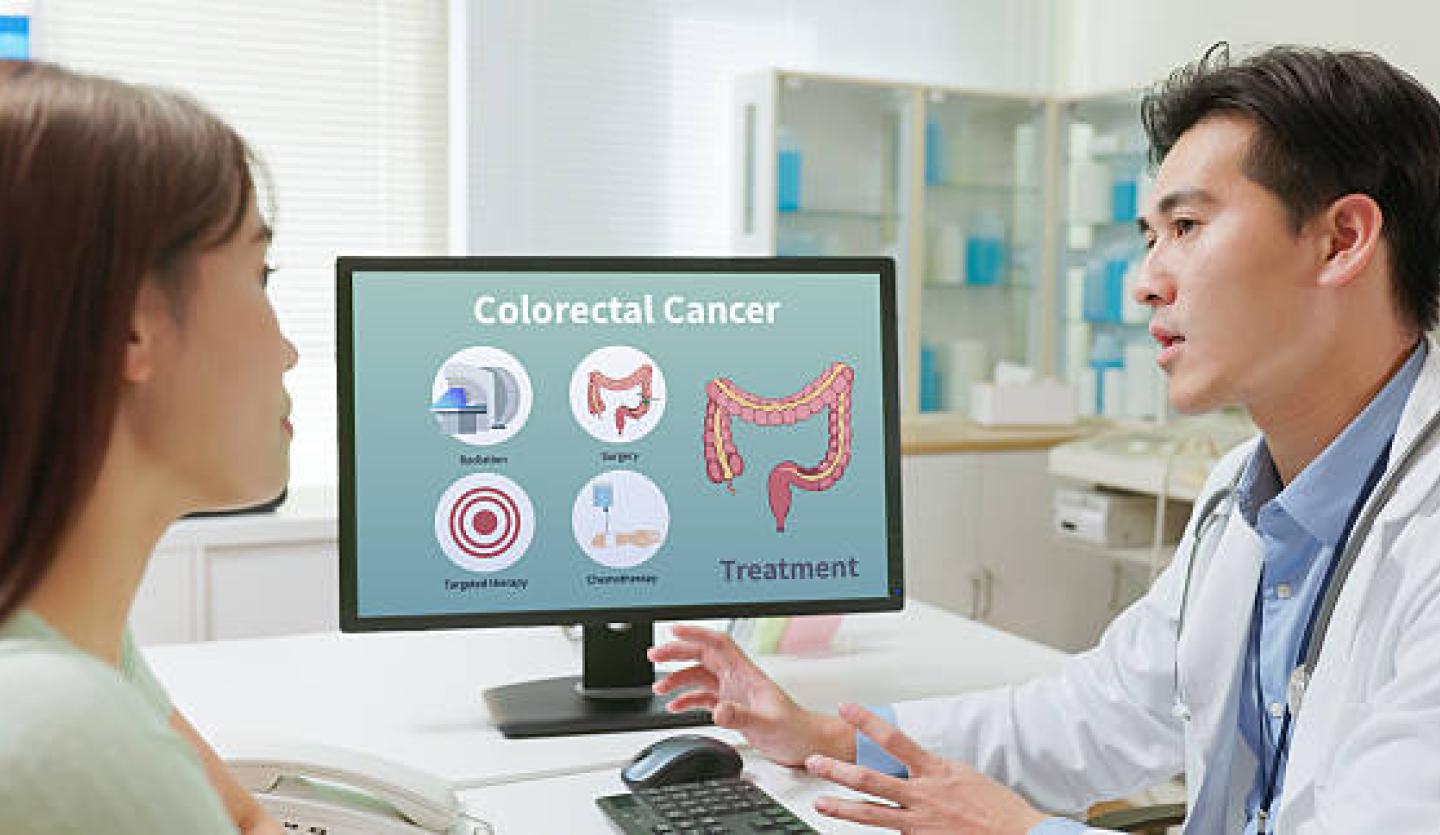
Colon Cancer Treatment Options

If you or a loved one receives a colon cancer diagnosis, it is normal to have a lot of questions right away. Your treatment plan depends on details such as the type of cancer, where it starts, whether it has spread and your overall health. Your team will use that information to recommend an approach that fits your diagnosis and goals.

  • Medical oncology care (cancer medication treatments)
  • Radiation oncology
  • Surgery
  • Targeted therapy or immunotherapy for some people, depending on the cancer

At Catholic Health, you have access to a team that includes board-certified oncologists, colorectal surgeons, and gastroenterologists, along with registered nurse navigators and infusion or chemotherapy nurses. That team approach helps you understand each step, stay on track with treatment and feel supported throughout your care.

Colon Cancer Prevention

You cannot control every risk factor for colon cancer, especially when family history or certain health conditions play a role. However, you still have meaningful ways to protect your health, and the most powerful step is often the simplest one: stay current with screening at the age and interval your physician recommends.

Screening can help find cancer earlier, when treatment often offers more options. A colonoscopy can also remove certain polyps, which may lower your risk over time.

Along with screening, the habits you build over time can support colon health. You do not need perfection. You want a plan that fits your real life and feels sustainable.

Work to build these healthy habits into your daily living:

  • Avoid tobacco
  • Choose fiber-rich foods more often and limit processed foods
  • Incorporate exercise into your weekly routine
  • Limit alcohol use
  • Maintain a healthy weight over time

If you feel worried right now, take one step. Schedule a visit with your primary care physician or a gastroenterologist to review your symptoms, your family history and a screening plan that makes sense for you. Even mild or vague symptoms deserve attention. Learn more about the Gastroenterology Services at Catholic Health.

Find Care at Catholic Health

Find a Catholic Health doctor near you. Or call 866-MY-LI-DOC (866-695-4362).

browser error

Browser Error

Diagnosis: Our website no longer supports this web browser.

Treatment: Please use one of the following browsers for the best possible outcome.

  • edge web browser iconEdge
  • chrome web browser iconChrome
  • safari web browser iconSafari
  • firefox web browser iconFirefox