What Is Juvenile Idiopathic Arthritis?
JIA is the general name for a group of conditions that cause ongoing inflammation in the joints of children under age 16. To get that diagnosis, symptoms need to be present in one or more joints for at least six weeks. Inflammation brings swelling, pain, warmth and stiffness to affected joints. It can involve any joint in the body, including the jaw, and no two children experience JIA in exactly the same way. Some forms can also affect the eyes.
“One thing worth knowing is JIA is not necessarily a lifelong condition. About 75% of children with JIA eventually outgrow it,” said Dr. van Bosse. “That does not make the day-to-day any easier, but it does change the picture of what you are managing.”
Types of Juvenile Idiopathic Arthritis
JIA is not one condition. It is a group of related conditions, and the type your child has shapes everything from which joints are affected to what treatment looks like.
- Oligoarticular JIA — The most common type, affecting four or fewer joints, usually the knees, ankles or wrists. Children with this type have a higher risk of eye inflammation and need regular eye exams even when joints feel fine.
- Polyarticular JIA — Affects five or more joints, often on both sides of the body. It can involve the small joints in the hands and feet as well as larger joints like the knees and hips.
- Systemic JIA — The least common type but the one that casts the widest net. Beyond joint inflammation, it comes with high fevers that come and go, a light pink rash and sometimes inflammation of internal organs.
- Psoriatic arthritis – this form affects both joints as well as the skin, with multiple red, scaly skin patches. Sometimes it presents as just inflammation of a finger or toe, other times as pitted or ridged fingernails.
Symptoms of Juvenile Idiopathic Arthritis
JIA symptoms can change each day. In fact, younger children often do not say their joints hurt—they just seem stiff in the morning, start limping, or stop wanting to do things they used to love. As a parent, trusting what you see matters. Signs to watch for include:
- A light pink rash on the arms or trunk
- A limp, especially first thing in the morning
- Eye redness, pain or vision changes — these can occur without any joint symptoms
- Fevers that come and go, with no clear cause
- Joint pain or tenderness when touched
- Joint swelling, warmth or redness
- Stiffness, especially in the morning or after sitting for a while
- Unusual tiredness or low energy
What Causes JIA?
Physicians do not know exactly what triggers the body’s immune system to attack healthy cells and tissues in JIA. Research suggests that in some cases JIA develops when a child with a certain genetic makeup experiences an environmental trigger. This could be a viral infection that sends the immune system in the wrong direction. There is an increased risk of developing JIA if a child carries the gene HLA antigen DR4. The immune system then starts treating the joints as something to fight rather than protect.
Parents often carry a quiet guilt about their child’s diagnosis, but JIA is not caused by anything you did or did not do. Some forms of JIA are more common in girls, and having a family history of autoimmune conditions can slightly raise the risk. But plenty of children who develop JIA have no family history of it at all.
How Is JIA Diagnosed?
There is no single blood test that confirms your child has JIA. Physicians diagnose it by ruling out other conditions and looking for a pattern of inflammation over time. Because JIA symptoms can look like other childhood conditions, including infections, injuries and in some cases more serious illnesses, it takes a careful evaluation to get it right.
If JIA is suspected, your child will likely be referred to a pediatric rheumatologist, a specialist in childhood joint and autoimmune conditions. Tests your child’s care team may order include:
- Blood tests —general and non-specific tests for inflammation (complete blood count, C-reactive protein, erythrocyte sedimentation rate, complement test) and specific antibodies tests like rheumatoid factor and antinuclear.
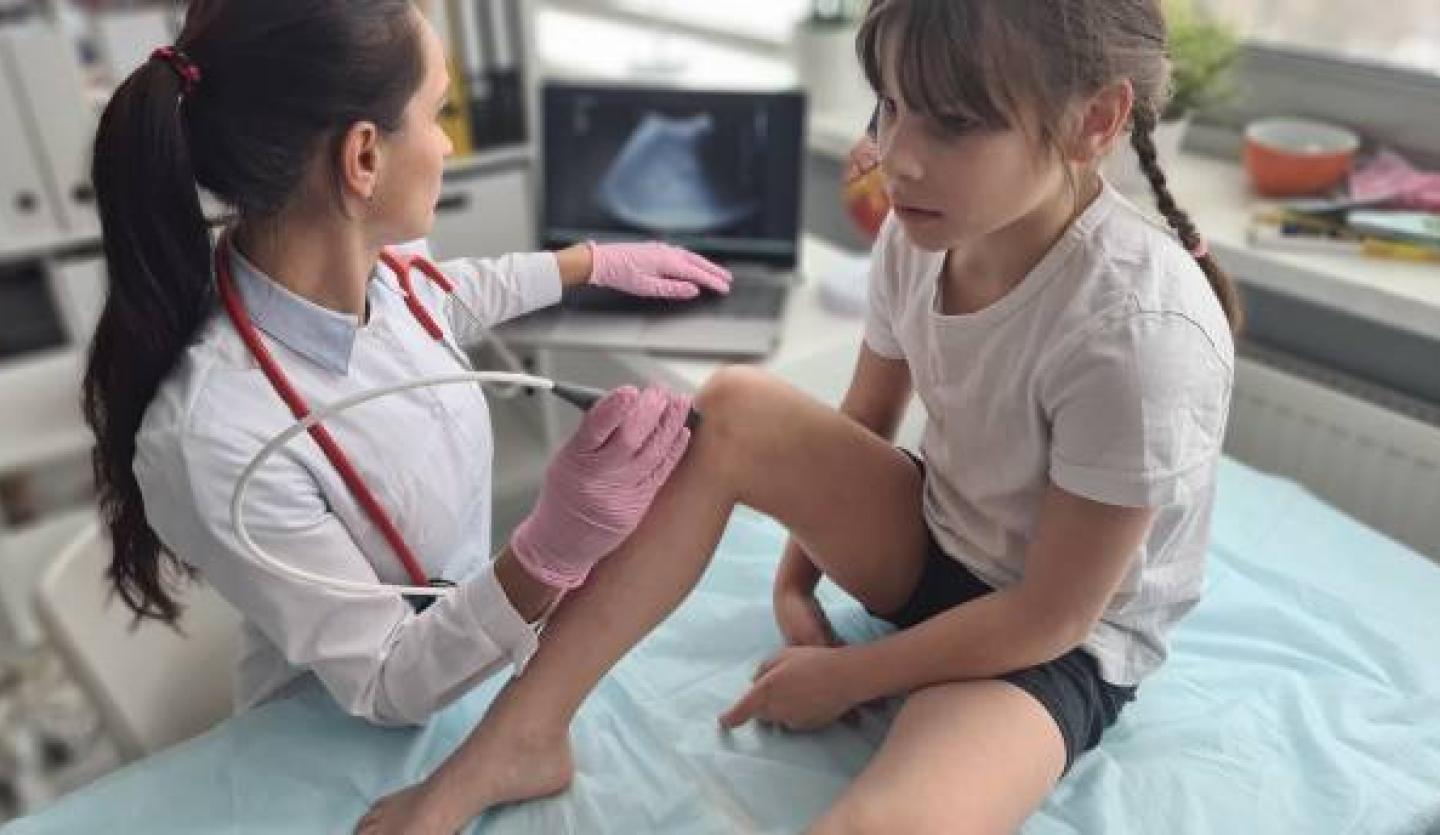
- Imaging — X-rays and MRI scans help us see what is happening in and around the joints and rule out other explanations for the pain.
- Joint aspiration – also called an arthrocentesis, using a needle to draw off some of the swelling in a joint, mostly to rule out other causes of joint swelling.
- Eye exam — Even if your child has zero eye symptoms, a visit to an ophthalmologist is important. Certain types of JIA cause inflammation inside the eye that is invisible without a specialized exam. If untreated, it can lead to vision loss.
Treating JIA
There is no cure for JIA right now. What we do have are treatments that can reduce inflammation, ease pain, protect your child’s joints from damage and keep them doing the things that matter to them. We build treatment around your child, not a standard protocol, and it changes as they do.
“Every child with JIA is different, and so is every treatment plan,” said Dr. van Bosse. “My goal is always to give kids their childhood back. That might mean getting a flare under control quickly so they can make it to a baseball game. It might mean finding the right medication so they wake up without stiffness every morning. We work toward what matters to them and to their family.”
Medications
Your child’s rheumatologist will recommend medication based on the type and severity of their JIA. Options range from milder anti-inflammatory medications to more targeted therapies for complex cases.
- NSAIDs (non-steroidal anti-inflammatory drugs) — Often, ibuprofen or naproxen is the first line of treatment to reduce pain and inflammation.
- DMARDs (disease-modifying anti-rheumatic drugs) — Methotrexate, for example, can slow the disease and help prevent joint damage.
- Biologic medications — When other medications are not enough, biologic medications can target specific parts of the immune system. They block specific inflammatory proteins called cytokines, which are an important step in the inflammation process.
- Corticosteroids — This short-term treatment can help to control severe inflammation quickly.
Physical and Occupational Therapy
Medication does a lot, but it does not do everything. Motion of a joint is very important to the joint health and recovery, even when it is not comfortable to do. Physical therapy helps keep your child strong and flexible and protects their range of motion. Occupational therapy helps your child manage daily tasks and find tools that make school, play and self-care easier. Both are an important part of good JRA JIA care.
When Symptoms Come Back
JIA tends to follow a pattern of flares — periods when symptoms get worse, and periods when symptoms are better. Common things that can make symptoms worse include illness, stress, overexertion and missed medication doses. Stay consistent with your child’s medication schedule, even on the good days. It is the most important thing you can do to keep flares less frequent.
When a flare does happen, let your care team know right away. We may adjust the treatment plan, and in the meantime, rest, warm compresses and gentle movement can help ease the discomfort.
Remission
Remission is when JIA symptoms ease significantly or disappear for a period of time. For many families, the first stretch of remission feels like a weight has been lifted. Your child wakes up without stiffness. They stop thinking about their joints. It can feel like JIA has simply left.
We want that for your child, too. But remission does not always mean the inflammation is gone. Some types of JIA can have silent activity that does not show up as visible symptoms. That is why regular visits with the rheumatologist and ophthalmologist should continue even when everything looks and feels good.
Living with JIA
A JIA diagnosis does not mean your child has to sit on the sidelines. Most children with JIA can participate in school, sports and daily activities with the right support. Some ways to help your child thrive:
- Keep them moving by doing low-impact activities like swimming, biking and walking.
- Talk to the school about accommodations, like extra time between classes, a second set of books at home or a heads-up to the PE teacher or school nurse about what to watch for.
- Protect the joints with splints, braces or supportive footwear to take some of the stress off affected joints.
- Keep routine eye exams with an ophthalmologist.
- Get emotional support when needed through counseling, peer support groups and connecting with other JIA families.
“Parents are some of the most important members of our care team,” said Dr. van Bosse. “You know your child in ways we never will. When you tell me something seems off, I listen. When you ask for answers, you are advocating for your child’s health. That partnership is what gets kids through this.”
If you or someone you know has been diagnosed with JIA, Catholic Health is here to help. Our team of pediatricians, rheumatologists, and orthopedists works with patients at every stage, from initial diagnosis through long-term management.


 Find a Doctor
 Find a Location
 Programs & Services
 Appointments & Video Visits



 Edge
Edge Chrome
 Safari
 Firefox