

 Find a Doctor
 Find a Location
 Programs & Services
 Appointments & Video Visits

IBS and Diet: Finding Foods That Work for You
Food plays a central role in social life, but for people with irritable bowel syndrome (IBS), it can also be a source of pain and unpredictability. Even small choices, such as a snack or soda, may trigger uncomfortable symptoms.
Indeed, IBS can feel overwhelming. This common gastrointestinal disorder affects an estimated 10 to 15 percent of people in the United States. While there is no single treatment that works for everyone, many people find symptom relief through dietary changes. Your health care team, which can include a gastroenterologist and registered dietitian, can help you create an individualized nutrition plan that works for you.

“Most people with IBS do not have to make drastic dietary changes before they start feeling better. It may take some trial and error, but you can identify the foods that trigger your symptoms and eliminate them or even find substitutes.”
Common Dietary Triggers for IBS
Dietary triggers vary by person, but commonly include:
- Alcohol
- Artificial sweeteners
- Caffeine
- Carbonated beverages, such as soft drinks or beer
- Cruciferous vegetables — examples include broccoli and cauliflower
- Dairy products
- Fried, fatty or highly processed foods
- Gluten — a protein found in wheat and some other grains
- High FODMAP foods, such as milk, soft cheeses, certain fruits and beans, which contain fermentable carbohydrates that are poorly absorbed in the small intestine
- Spicy foods
Identifying which foods affect you most often requires careful tracking.
How an Elimination Diet Can Help
Your physician may recommend a guided elimination diet to help pinpoint which foods affect your IBS symptoms.
“This process is not about depriving yourself or trying to create a perfect eating plan,” Dr. Freeman said. “It involves temporarily setting aside certain foods and then slowly bringing them back, so you can better understand what your body tolerates and what helps you feel your best.”
Because dietary changes are not appropriate for everyone, always talk with your physician before starting an elimination diet.
What is FODMAP?
FODMAP stands for fermentable oligosaccharides, disaccharides, monosaccharides and polyols, which are short-chain carbohydrates (sugars) that the small intestine absorbs poorly. Some people experience digestive distress after eating them.
IBS-Friendly Foods to Consider
Low FODMAP Foods
A diet low in FODMAP eliminates certain foods with particular sugars that may cause intestinal distress. This diet is designed to help people with irritable bowel syndrome decipher which foods are problematic and which foods reduce symptoms.
Research shows that a low FODMAP diet can reduce common IBS symptoms, including abdominal pain, bloating, gas and diarrhea.
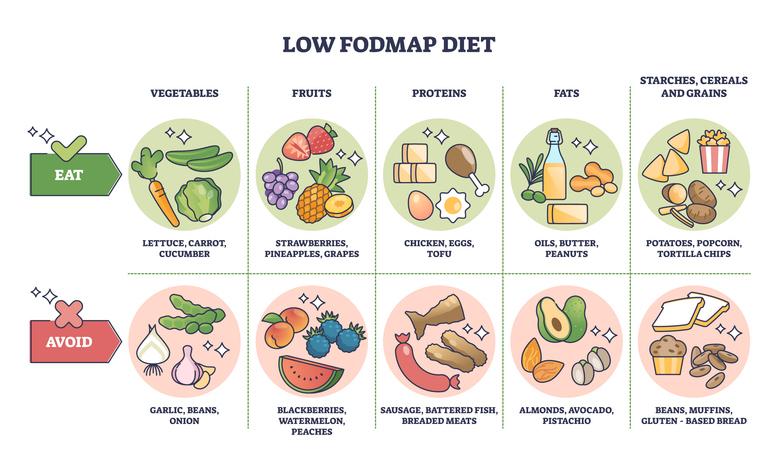
Examples of low FODMAP foods include:
- Fruits, such as bananas, cantaloupe, grapes and oranges
- Vegetables, such as pumpkin, lettuce, cucumbers and spinach
- Lean meats, eggs, lactose-free dairy products and hard cheeses
High FODMAP foods, including apples, garlic, onions, legumes, certain vegetables and lactose-containing dairy products, may worsen symptoms for some patients.
Soluble Fiber
Fiber supports healthy digestion, but not all fiber affects IBS the same way. People with IBS may tolerate soluble fiber better because it slows digestion and helps regulate bowel movements, especially for people with IBS and constipation.
Foods that are low in FODMAPs and high in soluble fiber include:
- Chia, flax and sunflower seeds
- Fruits, such as strawberries, blueberries, kiwis, lemons and limes
- Oats and oatmeal
- Quinoa and brown rice
- Vegetables, such as carrots, green beans, white potatoes and sweet potatoes
Cooked Vegetables
Vegetables provide essential nutrients, but large amounts of raw vegetables can be difficult to digest. Cooking vegetables softens fiber and can make them easier on the digestive system. A registered dietitian can help ensure meals remain nutritious while improving tolerance.
Lean Proteins
High-fat foods can overstimulate digestion and worsen symptoms. Lean protein options cause less stress to your system. These include:
- White-meat chicken or turkey
- Pork
- Eggs
- Fish rich in omega-3 fatty acids, such as salmon, sardines and whitefish
- Lean cuts of beef, such as sirloin or top round
Lactose-Free and Dairy Alternatives
Lactose and casein (the main protein in cow’s milk) can trigger symptoms in some people with IBS. Limiting dairy intake or choosing lactose-free, soy, nut or oat-based alternatives can help.
A Balanced Approach to Eating With IBS
Dietary changes can feel overwhelming, especially when you are not sure which ones to make first. But you do not have to go it alone. Catholic Health is here to help, with a team of gastroenterologists and registered dietitians, along with extensive digestive health services.






 Edge
Edge Chrome
 Safari
 Firefox