There is no single best sleeping position for everyone. The right choice depends on your body, what feels comfortable and any health problems you have.
Side Sleeping
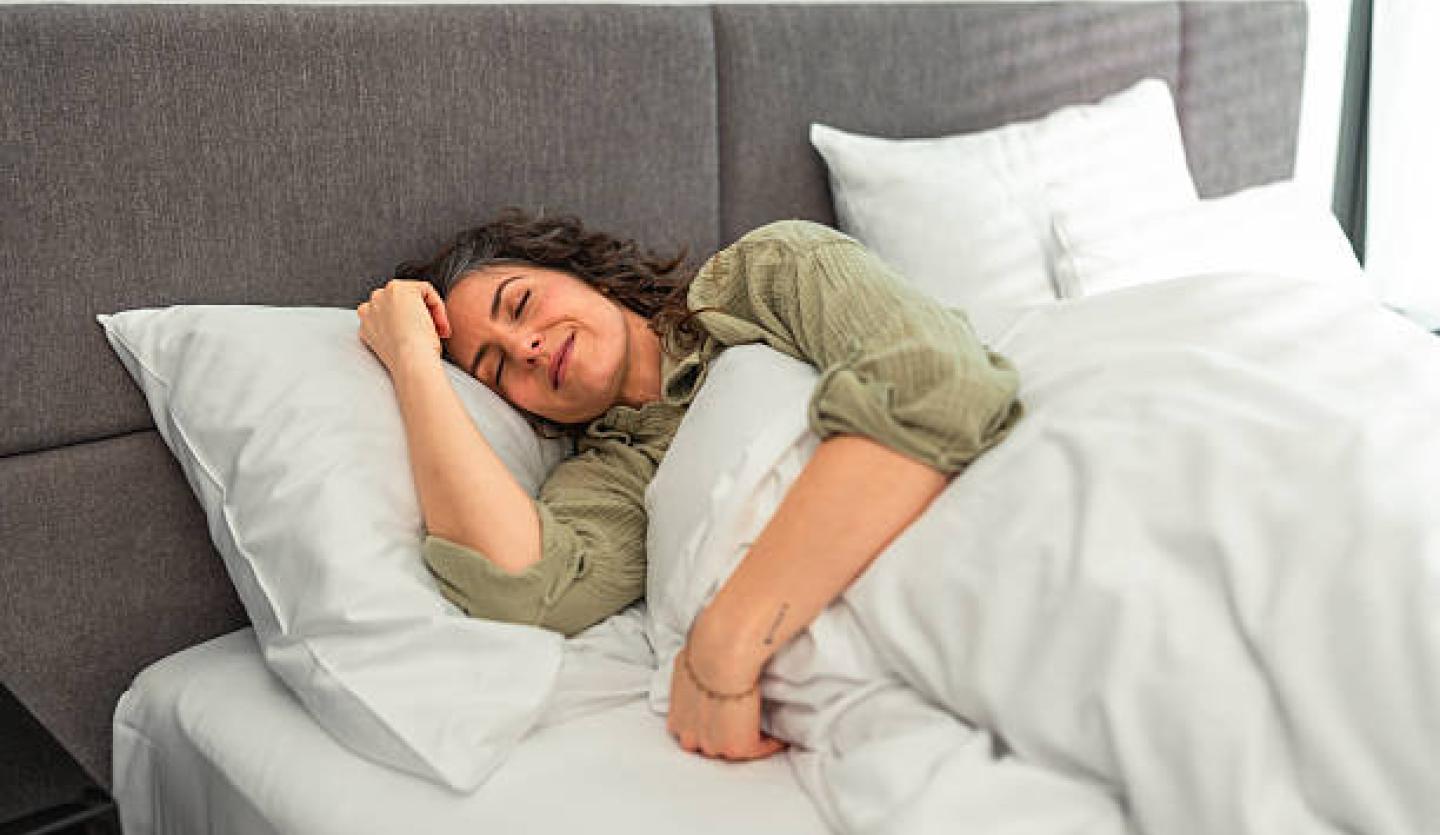
Side sleeping is the most common sleep position. More than 60% of adults sleep on their side.
Why it can help:
- Easier breathing — Lying on your side helps keep your airway open, which can reduce snoring and ease sleep apnea.
- Less heartburn — Resting on your left side keeps your stomach below your esophagus, making it harder for acid to travel upward.
- Comfort during pregnancy — The left side is the position most often recommended in later pregnancy.
What to watch for:
- Shoulder and hip pressure — Your weight rests on one shoulder and hip, which can lead to soreness by morning.
- Neck strain — A pillow that is too flat or too thick can bend your neck out of line.
- Twisted hips — If your top knee drops forward, it can pull your lower back and hips out of alignment.
Back Sleeping
Back sleeping spreads your weight evenly and lets your head, neck and spine rest in a natural line. Many people who sleep this way wake up with less neck, back and hip pain.
Why it can help:
- Spine alignment — Your body stays flat and supported, so no single joint carries extra pressure.
- Less morning pain — Back sleepers often report less morning stiffness in the neck and lower back.
What to watch for:
- Snoring and sleep apnea — Gravity can pull your tongue and soft tissues toward the back of your throat, narrowing your airway. More than half of people with obstructive sleep apnea have worse symptoms on their back.
- Acid reflux — Lying completely flat makes it easier for stomach acid to flow back into your esophagus.
Stomach Sleeping
Few people sleep on their stomach. It may help with snoring, but it can be hard on your neck and back.
What to watch for:
- Neck strain — To breathe, you have to turn your head to one side for hours, which twists your neck.
- Lower back pain — Your midsection sinks into the mattress, arching your lower back and stressing your spine.
- Tingling or numbness — Lying with your arms tucked under your body or pillow can press on nerves.
If stomach sleeping is the only way you can drift off, you do not have to give it up overnight. The tips below can lessen the strain while you work toward a new habit
The Best Sleeping Position for Common Health Problems
If you manage a health condition, your body may do better in one position than another.
- Acid reflux — Sleep on your left side. Raising the head of your bed about 6 inches can also help keep acid down.
- Back pain — Try your side with your knees slightly bent, or your back with support under your knees.
- Neck pain — Back or side sleeping with a pillow that keeps your head level with your spine is usually most comfortable.
- Pregnancy — Lie on your left side with your knees bent, especially in the third trimester.
- Shoulder pain — Sleep on your back or on the side that does not hurt.
- Snoring or sleep apnea — Side sleeping is your best option. If you cannot stay off your back, raising the head of the bed may ease symptoms.
Pillow Placement Tips for Better Alignment
The right pillow in the right place can turn a so-so position into a supportive one.
- For back sleepers — Choose a medium pillow that supports the curve of your neck without pushing your chin toward your chest. Tuck a small pillow under your knees to take tension off your lower back.
- For side sleepers — Pick a firmer, thicker pillow that fills the space between your ear and the mattress. Place a pillow between your knees to keep your hips stacked, and hug a pillow in front of you to keep your top shoulder from rolling forward.
- For stomach sleepers — Use a very thin pillow or none at all under your head. Slide a flat pillow under your hips to keep your lower back from sagging.
- For reflux — Try a wedge pillow that raises your upper body, rather than stacking regular pillows, which can bend your neck.
“The right pillow does more than provide comfort; it helps maintain proper alignment of your head, neck, and spine throughout the night. If you're consistently waking up with neck stiffness or discomfort, your pillow may not be providing the support you need,” added Mr. Warkentin. “Choosing a pillow that complements your preferred sleeping position can help reduce unnecessary strain and improve overall sleep comfort.”
When to Speak with a Physician
A new pillow or position can go a long way, but some sleep problems need a closer look. Talk with your doctor if you:
- Snore loudly or have been told you stop breathing or gasp during sleep
- Feel exhausted during the day even after a full night in bed
- Have heartburn several nights a week
- Wake up with neck or back pain that does not improve after changing your position
These can be signs of sleep apnea, chronic reflux or a joint or spine problem. A sleep study at one of our sleep centers can find out what is happening while you rest.
Learn more about Sleep Medicine at Catholic Health.
Frequently Asked Questions About Sleep Positions
Is it normal to change positions during the night?
Yes. Most people shift positions many times while they sleep, often without waking. What matters most is the position you spend the most time in and the one you fall asleep in.
Can you train yourself to sleep in a new position?
It takes patience, but many people can. Start each night in the new position and use pillows to keep you there. A body pillow behind your back can stop you from rolling over. Give yourself a few weeks to adjust.
Does my mattress matter as much as my position?
Your mattress and position work together. A mattress that is too soft lets your hips and shoulders sink, while one that is too firm can create pressure points. Side sleepers often do best with a softer surface, while back and stomach sleepers usually need firmer support.
 Find a Doctor
 Find a Location
 Programs & Services
 Appointments & Video Visits






 Edge
 Chrome
 Safari
 Firefox

