
Acid Reflux and Hiatal Hernia Center of Excellence

The Acid Reflux Specialists at Catholic Health provide solutions for acid reflux patients concerned about long-term side effects and dependence on medications. They offer innovative treatments and minimally invasive surgical procedures that provide long-lasting relief. 

Innovative Treatment for Reflux Disease

Patients with chronic heartburn and gastroesophageal reflux disease (GERD) are commonly prescribed medications that have long-term side effects. At Catholic Health, our Acid Reflux Program offers minimally invasive surgeries that give patients a permanent solution to treat reflux rather than stay on lifelong medication treatment. We also offer surgical options for hiatal hernias.

What is Acid Reflux Disease? 

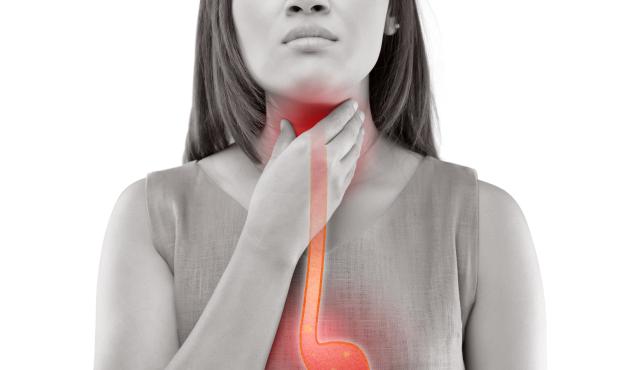
Acid reflux, also known as gastroesophageal reflux disease (GERD) can be a chronic condition. With this condition, acid from the stomach flows back into the esophagus because of a malfunctioning esophageal sphincter—the muscular valve that closes after food enters the stomach. During an episode of acid reflux, people often feel an uncomfortable, burning sensation in the chest, commonly called heartburn. 

FAQ's

Acid reflux can affect people of all ages, sometimes for unknown reasons, however, it is often the result of lifestyle factors. Risk factors for acid reflux include: 

  • Being overweight
  • Smoking
  • Taking certain medications including nonsteroidal anti-inflammatory drugs (NSAIDS) such as aspirin and ibuprofen
  • Having a hiatal hernia
  • Pregnancy

Common symptoms include:

  • Heartburn
  • Chest pain
  • Nausea
  • Persistent regurgitation
  • A sour taste in the mouth
  • Burping
  • Dry, chronic cough
  • Sore throat, hoarseness or laryngitis
  • Difficulty swallowing
  • Alcoholic beverages like wine and beer
  • Caffeinated drinks – especially coffee
  • Chocolate
  • Carbonated drinks
  • Fried and fatty foods
  • Spicy foods
  • Acidic fruits like oranges, lemons, tomatoes

Eating large meals or overeating, as well as eating late at night before you go to bed may also cause acid reflux.

When Should You See a Doctor for Acid Reflux?

Many people experience occasional heartburn or acid reflux symptoms. They can often be treated with over-the-counter medication or lifestyle changes. However, if you experience persistent symptoms including any of the following, make an appointment with an Acid Reflux Specialist at Catholic Health. 

  • Heartburn symptoms are severe or more frequent
  • Difficulty swallowing or pain when swallowing
  • Heartburn that causes nausea or vomiting
  • Drastic or unexplained weight loss
  • A chronic cough or a feeling of a lump in your throat
  • Persistent heartburn symptoms, even after taking prescription or nonprescription medications
  • Pain and discomfort that interferes with your daily activities
  • Chest pain
  • Extreme stomach pain
  • Diarrhea or black or bloody bowel movements

Diagnostic Tests

The following diagnostic tests may be performed to diagnose your condition and decide which specific treatment option will address your condition and relieve your symptoms.

One Day - Acid Reflux Testing

Most diagnostic tests for acid reflux related conditions can all be performed on the same day, including:

Upper Endoscopy (Gastroscopy)

An upper endoscopy allows the doctor to visually examine the esophagus and surrounding tissues. It uses a tiny camera on the end of a flexible tube to view the upper digestive system. The camera helps provide a view of the inside of the esophagus and stomach and can help find inflammation of the esophagus or other complications.

EndoFLIP

An EndoFLIP (endoluminal functional lumen imaging probe) procedure is performed to evaluate the condition of the esophagus. It use a sensory balloon attached to a catheter to measure pressure, dimensions and movement inside your esophagus. It allows the doctor to see every detail from within the esophageal wall, helping to diagnose acid reflux related issues.

Bravo pH Monitor Placement

The doctor uses an endoscope to place a pH capsule (approximately the size of a gel capsule) on the esophageal wall. The capsule contains a sensor that measures acid levels in the esophagus over an extended period of time. 

 Esophagram 

Also referred to as a barium swallow, this test involves drinking a chalky substance (barium contrast) that coats your internal organs and a fluoroscopic X-ray is used to take live images to observe the barium's movement through the esophagus while swallowing. 

Additional Tests

You may be required to schedule additional testing for certain symptoms and conditions. These tests may include:

Gastric Emptying

This is a medical imaging test that tracks how long it takes food and liquids to move through your stomach and empty from it. This is a nuclear imaging test that works by scanning a radioactive tracer as it moves through your stomach.

High-Resolution Esophageal Manometry

This diagnostic test is typically performed if you have trouble swallowing. It is used to help detect esophageal motility disorders. It measures the rhythmic muscle contractions in the esophagus while swallowing. 

Treatments

How does medication treat GERD? 

Proton pump inhibitors (PPIs) are commonly prescribed to patients with GERD. Over time, these medications can cause side effects such as osteoporosis and electrolyte abnormalities.

What other options treat GERD?

Minimally invasive anti-reflux surgery procedures are available as a permanent solution for acid reflux for patients who:

  • Continue to have regurgitation while taking prescription medication
  • Experience side effects from medications
  • Do not want to remain on medications for the rest of their life
  • Are concerned about long-term side effects

Surgical Options for GERD

Minimally invasive anti-reflux surgery procedures are available as a permanent solution for acid reflux.

A laparoscopic, robotic-assisted surgery where the upper part of the stomach is wrapped around the food tube to create a new valve. The procedure typically takes one hour.

A minimally invasive procedure that eliminates reflux and regurgitation.

Barrett’s Disease, or Barrett’s Esophagus is a condition caused by chronic acid reflux. As a result, the lining of the esophagus changes and becomes thicker. People with Barrett’s Disease have a higher risk of developing esophageal cancer.

This minimally invasive procedure inserts a magnetic ring into the lower esophagus to create a new sphincter. A small, flexible band of magnetic beads, about the size of a quarter, is wrapped around where the stomach and esophagus meet. Once implanted, the magnetic band opens when a patient swallows food and closes to prevent stomach acids from flowing back into the esophagus. The same-day procedure typically takes less than one hour.

St. Charles Hospital offers High-Resolution Esophageal Manometry, which can help detect esophageal motility disorders such as achalasia and nutcracker esophagus.

Transoral incisionless fundoplication (TIF) is a procedure that treats symptomatic GERD by reconstructing the body's natural barrier against reflux without incisions. By restoring the natural shape, location and effectiveness of the esophageal flap valve, this incisionless procedure addresses the root cause of reflux. The TIF procedure fills the treatment gap between medication and conventional anti-reflux surgery.

Meet the Team

Ahmad

Arif Ahmad MD, FACS, FRCS

Director, Acid Reflux and Hiatal Hernia Center of Excellence at St. Charles Hospital

Agarwala

Ashish Agarwala, DO, FACS

Director, Motility Lab, Acid Reflux and Hiatal Hernia Center of Excellence at St. Charles Hospital

ChristaMarie Staiger, MBA

ChristaMarie Staiger, MBA

Program Coordinator, Acid Reflux and Hiatal Hernia Center of Excellence at St. Charles Hospital

Acid Reflux Program Locations

St Charles Hospital

St. Charles Hospital

Port Jefferson, NY

Riverhead

Catholic Health Ambulatory Care at Riverhead

Riverhead, NY