

 Find a Doctor
 Find a Location
 Programs & Services
 Appointments & Video Visits
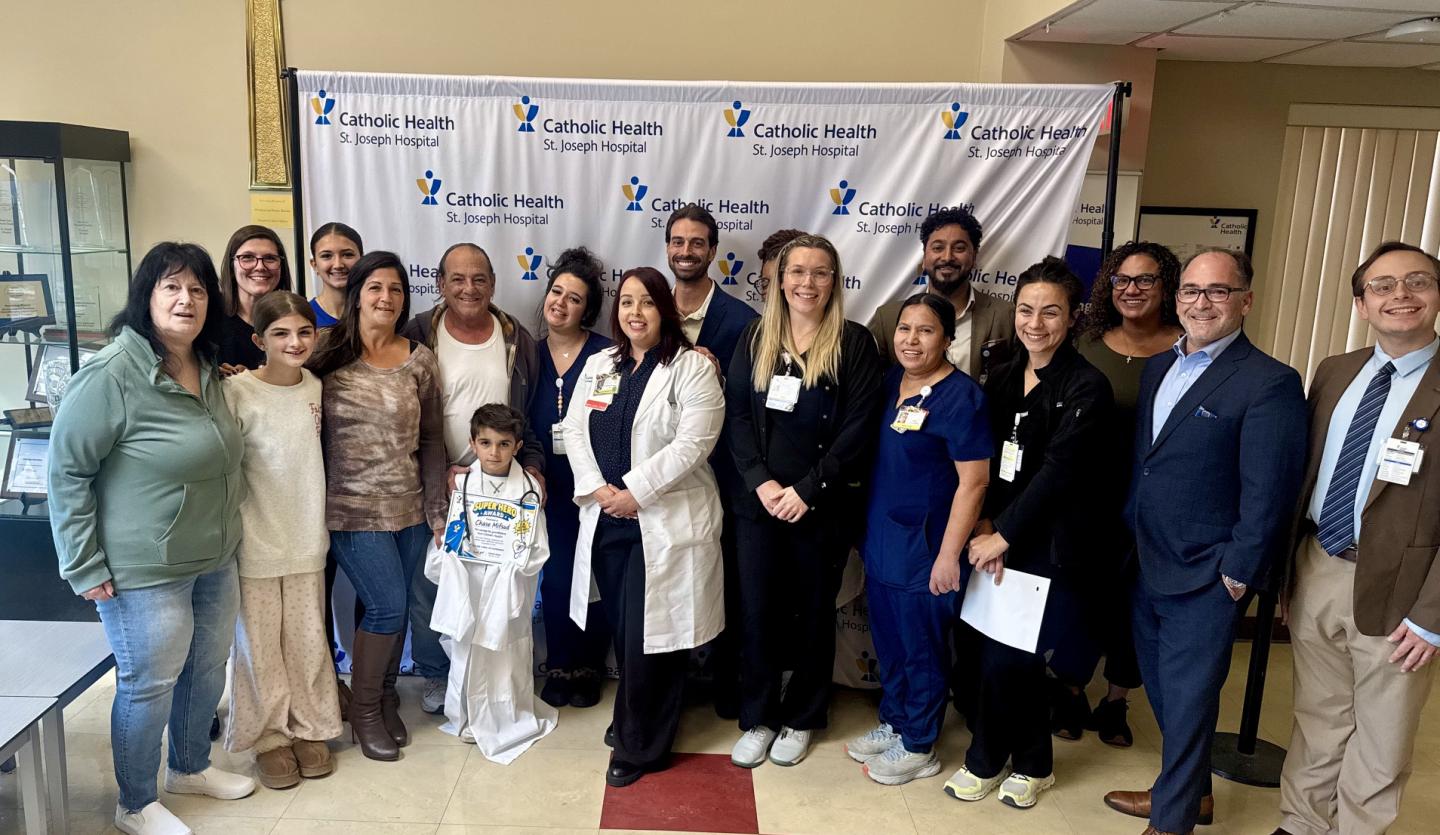
Would your child know what to do if someone they loved needed emergency help? For five-year-old Chase Mifsud, being prepared meant being able to help his grandfather during a frightening medical emergency.
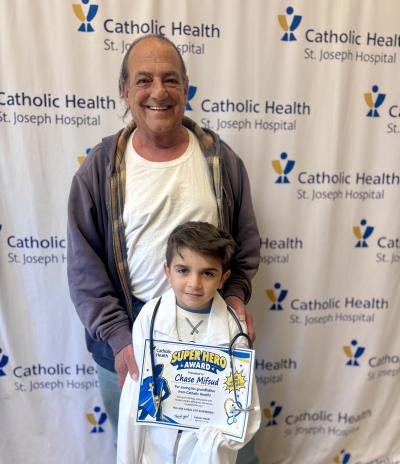
Catholic Health’s St. Joseph Hospital recently named Chase an honorary doctor, celebrating his compassion and courage while sharing an important message: conversations about emergency preparedness can begin at a young age.
Chase’s grandfather, Anthony Magno, was home alone waiting for Chase to return from a playdate when he became ill. During a FaceTime conversation, Chase’s mother, Roseann, noticed that Anthony was having difficulty breathing and experiencing slurred speech, prompting a call for emergency assistance.
While they waited for EMS, Chase stepped into a caring role. He took his grandfather’s temperature, held his hand and rubbed his back. In a moment when his grandfather was vulnerable, Chase knew he could help by staying close and offering comfort.
Anthony was transported to St. Joseph Hospital’s Emergency Department, where he was evaluated and later diagnosed with pneumonia. After receiving care, he was discharged from the hospital, where he and Chase shared a heartfelt reunion.
For the grandfather and grandson, who live together in Merrick and are described by their family as “attached at the hip,” being back together was especially meaningful.
"Dr. Chase’ stood by his grandfather, took his temperature and comforted him while they waited for EMS,” said Dr. John Mathew, chief medical officer of St. Joseph Hospital. “We cannot predict what would have happened otherwise, but his story reinforces why it is so important to prepare children for emergencies. Teaching them how to get help and reassuring them that they have a role can give them the confidence to act during a frightening situation.”
Chase’s story offers families a starting point for those conversations. Parents and caregivers can talk through simple scenarios: What would you do if a grandparent became sick? How would you reach a trusted adult? What would you tell an emergency dispatcher?
“Children do not need to diagnose a medical problem or feel responsible for fixing it,” Dr. Mathew said. “The goal is to help them recognize when something is wrong, know how to contact a trusted adult or call 911, and follow instructions. Practicing those steps together can make them feel more familiar if an emergency happens.”
To recognize his caring actions, St. Joseph Hospital welcomed Chase as “Dr. Chase,” presenting him with a Catholic Health jacket and a stethoscope. The honorary title celebrated a little boy who brought comfort to someone he loves.

 Edge
 Chrome
 Safari
 Firefox