

 Find a Doctor
 Find a Location
 Programs & Services
 Appointments & Video Visits
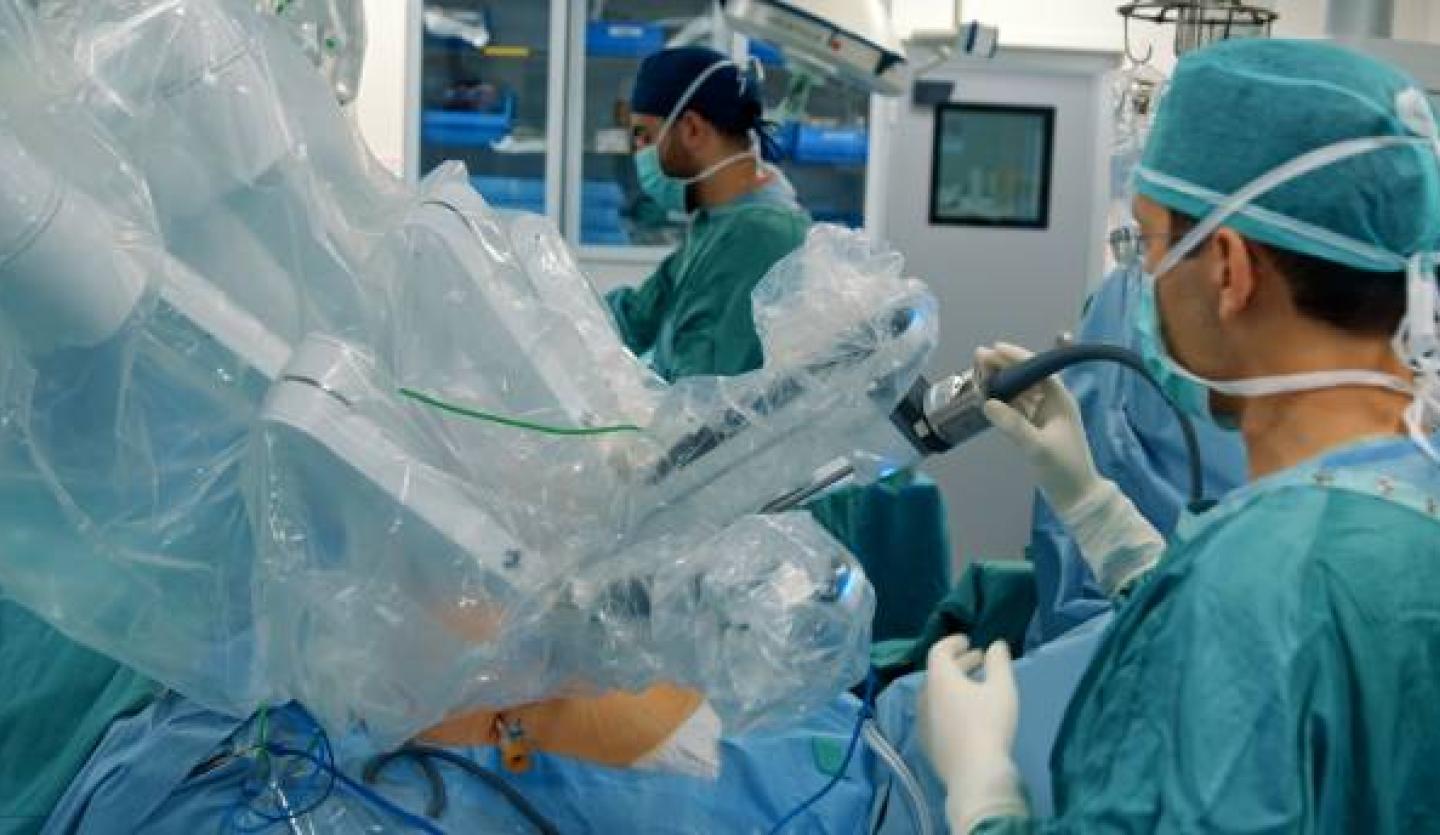
A pancreatic cancer diagnosis can cause a range of emotions including fear, anxiety and uncertainty about the future. Because symptoms are often subtle in the early stages, pancreatic cancer is commonly diagnosed at a later stage, making early detection and timely intervention critical.
Although pancreatic cancer can be particularly difficult to treat, recent advances in medical technology have reshaped the treatment for pancreatic cancer and include innovative surgical procedures.
Surgery remains the gold standard treatment for treating pancreatic cancer in combination with chemotherapy, radiation therapy and immunotherapy, when necessary, and diagnosis at an early stage remains critical for the best options for a cure.
Understanding Pancreatic Cancer
The pancreas is a small organ (about six inches in length) located in the center of the abdomen, close to the stomach, intestines, and other organs. It is situated behind the stomach and in front of the spine. The pancreas produces digestive enzymes and hormones to digest the food we eat.
Pancreatic cancer occurs when cancer cells form and grow within the pancreas. The most common form of pancreatic cancer is pancreatic ductal adenocarcinoma, which is caused when the cells in the inner lining of the pancreatic duct transform into cancer cells.
Advanced Treatment Options
Diagnosis of pancreatic cancer in early stages is critical for best treatment options transforming into good outcomes, although they don’t typically present with symptoms. Once the diagnosis is made, timely intervention with a multidisciplinary team consisting of pancreatic surgeons, oncologists, gastroenterologists, radiologists, pathologists and other specialists is critical.
If the cancer is diagnosed early enough to be removed by surgery, this treatment is often considered the best and first chance for a cure. Surgery followed by chemotherapy with immunotherapy and sometimes radiation definitely augments cancer outcomes. The best chance for cure is a multimodality approach with all treatment options.
The Whipple Procedure
When cancerous tumors are detected within the head of the pancreas, the standard of care is to surgically remove the tumors and cancerous tissue before they spread. This procedure is known as the Whipple Procedure, also referred to as a pancreaticoduodenectomy.
The goal of a Whipple procedure is to remove the cancer and prevent it from growing and spreading to other organs. For early stage pancreatic cancer, this procedure is the treatment that can lead to long-term survival.
The Whipple procedure is an extremely complex abdominal surgery that is performed to treat tumors of the head of the pancreas, lower part of the bile duct and around the ampulla. It involves removing the head of the pancreas, the duodenum (the first part of the small intestine), the gallbladder, part of the bile duct, sometimes a portion of the stomach and the surrounding lymph nodes. The remaining part of the stomach, bile duct and pancreas are then reconnected to the digestive tract to restore the flow of ingested food, digestive enzymes and bile.
In some cases, a pylorus-sparing Whipple (a modified Whipple procedure) may be performed. In this case, the entire stomach is preserved including the pylorus (a valve between the stomach and the duodenum).
Candidates for the Whipple Procedure
The Whipple procedure is an option for patients whose cancer is confined to the pancreas or the small area adjacent to it. Patients should be in good health without other underlying conditions, and healthy enough to reasonably anticipate that they will fully recover.
The Whipple procedure is generally not considered for patients whose cancer has spread to other organs or parts of the body. Since it is a complex surgery, it is usually not recommended for patients that are frail or not strong enough to make a full recovery.
A multidisciplinary team of cancer specialists and oncologists will perform a comprehensive evaluation of a patient’s health and stage of cancer, including imaging tests and biopsies, to determine if the Whipple procedure is the right course of treatment.
Robotic-Assisted Whipple Procedure
Until recently, the Whipple Procedure was traditionally performed by conventional open surgery, through a large abdominal incision to access the pancreas. While this approach remains the most commonly performed technique, the advanced, robotic minimally invasive technique offers additional benefits.

“A robotic-assisted Whipple procedure is still a highly complex surgery. But this innovative technique allows us to perform the same surgery with precision and quality, without making a large incision. This enhances recovery, making the hospital stay shorter with reduced post-operative pain.”


 Edge
Edge Chrome
 Safari
 Firefox